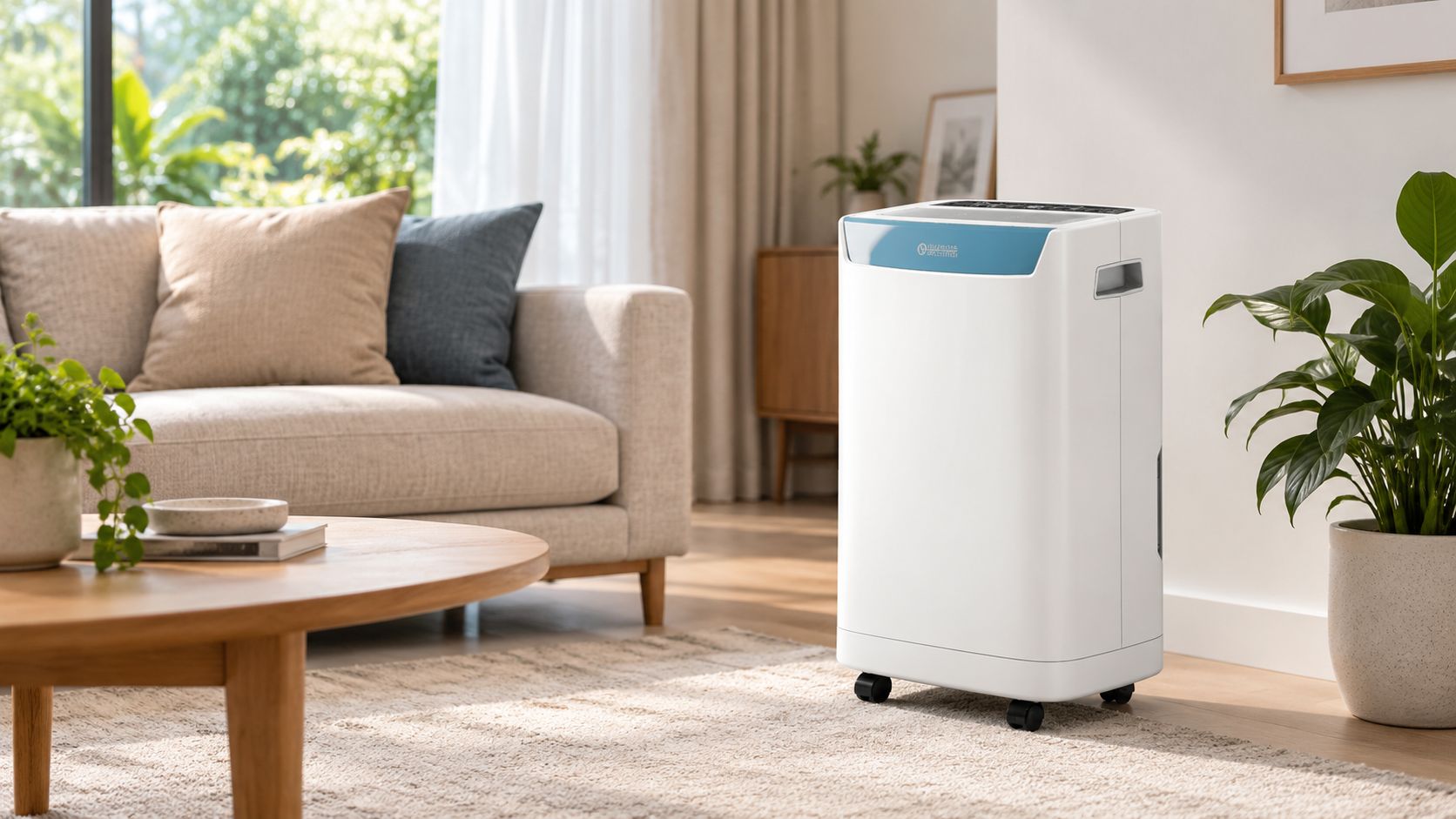
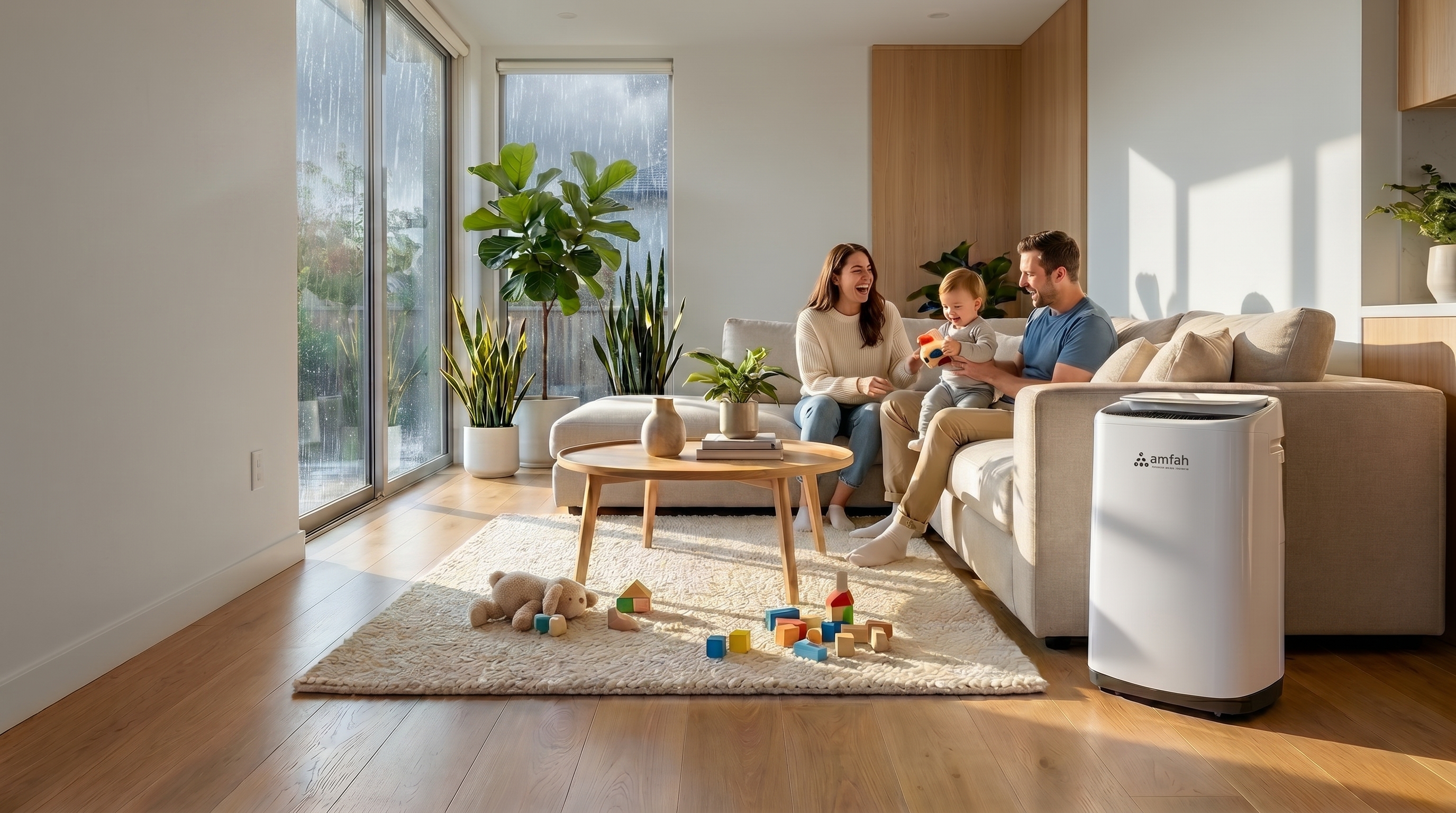
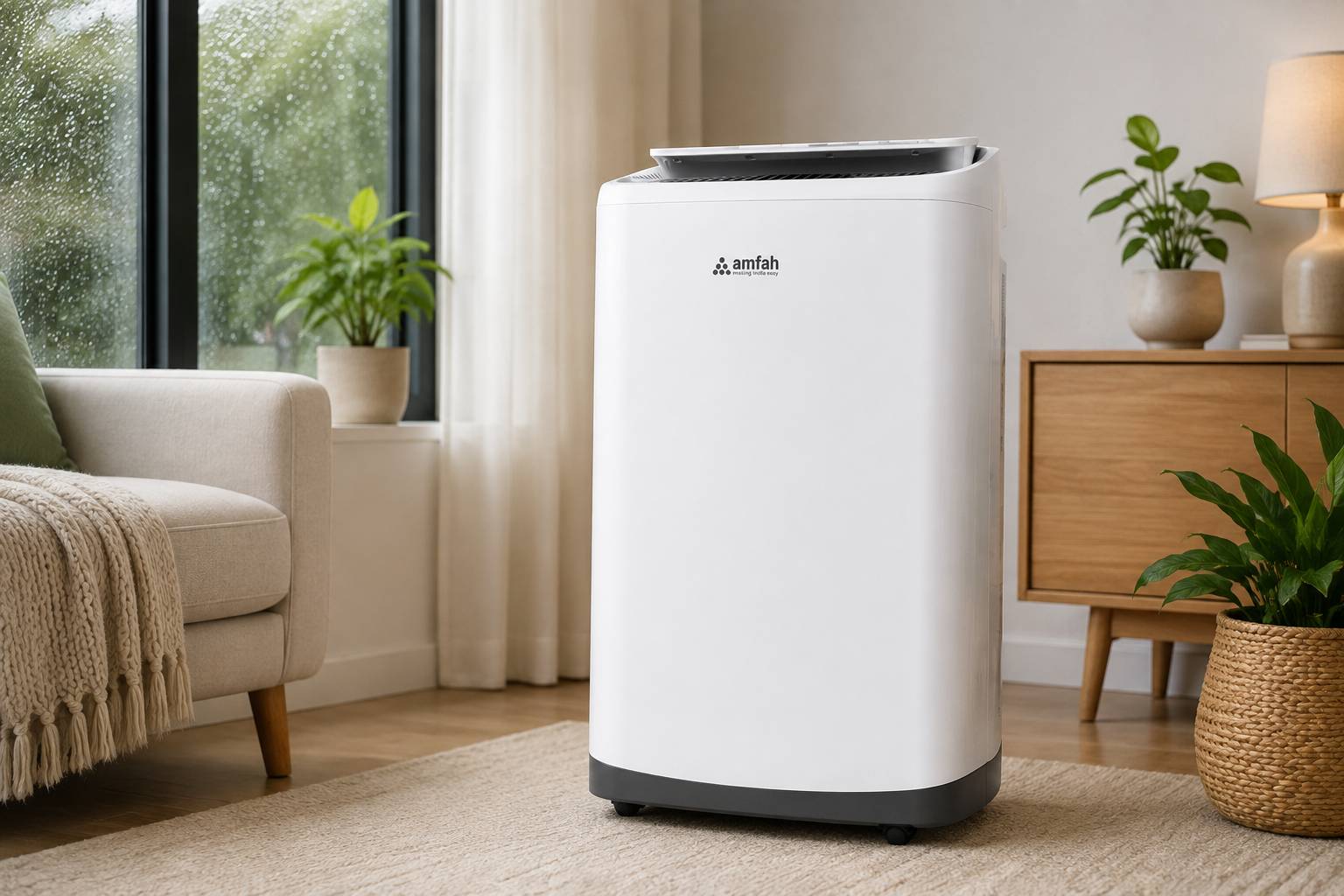
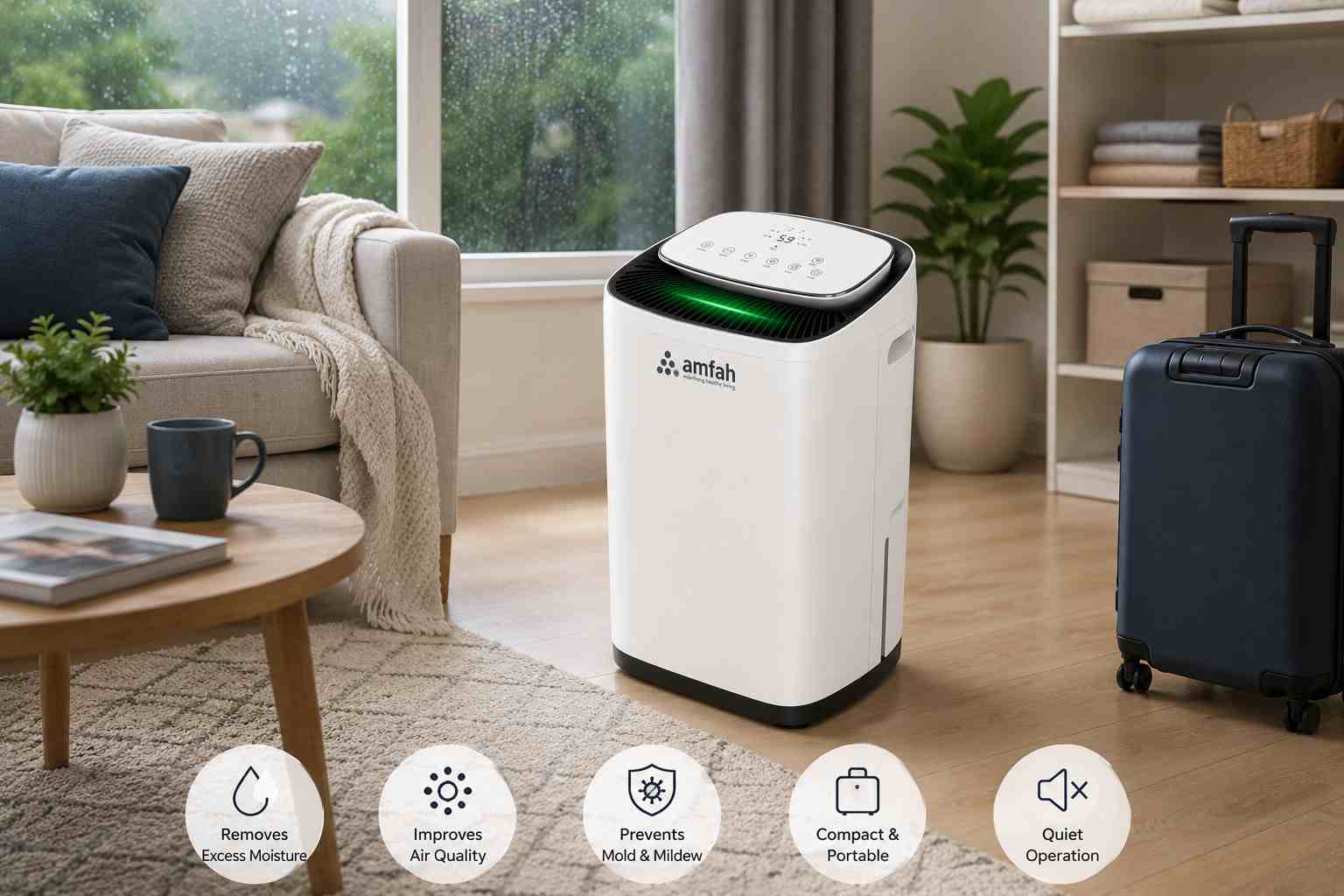
There are days when your living room feels uncomfortable even though the fan is running and the windows are open. The sofa feels slightly damp, the air feels heavy, and clothes or curtains may take longer to dry.
This is especially common during humid weather and monsoon months. The problem may not be temperature alone. High humidity can make a room feel damp and uncomfortable even when it isn't particularly hot.
A dehumidifier can help by removing excess moisture from the air. But choosing one for a living room is not simply about buying the biggest machine available. The size of the room, moisture level, ventilation, and how the space is used all matter.
Why Can a Living Room Become Too Humid?
A living room may seem like one of the driest areas of a home, but several everyday activities can increase moisture.
Cooking in nearby areas, drying clothes indoors, frequent opening of doors and windows, wet floors, poor ventilation, and humid outdoor air can all contribute to higher indoor humidity.
In apartments, moisture can also enter through bathrooms, kitchens, balconies, or poorly ventilated areas. During the monsoon, the problem can become more noticeable because the outside air itself carries a large amount of moisture.
A room doesn't necessarily need visible water or condensation to have a humidity problem. Sometimes the first sign is simply that the room feels damp or the air feels heavier than usual.
Signs Your Living Room May Have Too Much Moisture
You may notice several small changes before humidity becomes a major problem:
- The room may have a damp or musty smell.
- Cushions, curtains, carpets, and upholstery may feel less dry than normal.
- Condensation can sometimes appear on cooler surfaces.
- Wooden furniture and other moisture-sensitive materials may also be affected over time.
- Another common sign is that the room never seems to feel completely fresh, particularly during long periods of humid weather.
If several of these signs appear together, checking the indoor humidity level with a hygrometer can give you a better idea of what is happening.
What Does a Dehumidifier Do in a Living Room?
A dehumidifier works by pulling humid air into the unit, removing moisture from that air, and releasing drier air back into the room.
The extracted moisture collects inside the water tank or is removed through a continuous drainage connection, depending on the type of unit.
This makes a dehumidifier different from an air conditioner. An air conditioner is primarily designed to cool the room, while a dehumidifier is specifically designed to control excess moisture.
For a living room where humidity is the main concern, dedicated humidity control can make the space feel noticeably more comfortable.
Choosing the Right Dehumidifier for Your Living Room
One of the most common mistakes is choosing a dehumidifier only by looking at the maximum extraction capacity.
The right size depends on more than floor area.
A relatively dry living room may need less moisture-removal capacity than a similarly sized room that regularly feels damp. Climate, ventilation, number of occupants, doors and windows, and nearby moisture sources can all affect the actual requirement.
For example, a living room in a humid coastal area may have a very different moisture load from a similarly sized room in a relatively dry climate.
This is why room size and humidity conditions should be considered together.
If you are unsure about the required capacity, our guide on what size dehumidifier you need can help you understand the factors involved before choosing a unit.
Dehumidifier for Hall vs Living Room
In many Indian homes, the words hall and living room refer to the same general space.
Whether you call it a hall, living room, drawing room, or family room, the basic humidity-control requirement remains similar.
What matters more is the actual space.
A small enclosed room will have different requirements from a large open hall connected to a dining area, kitchen, corridor, or staircase.
An open-plan living area can be particularly important to consider because moisture may move between connected spaces. In such cases, simply looking at the square footage of one section may not give you the complete picture.
Where Should You Place a Dehumidifier?
Placement can make a noticeable difference to how effectively the unit circulates air.
A living-room dehumidifier should generally have enough open space around its air intake and outlet. Avoid pushing it tightly against furniture, curtains, or walls where airflow could be restricted.
A central or reasonably open position can help the unit circulate air more effectively, although the ideal location depends on the room layout.
If one particular area has a higher moisture problem, such as a corner near a balcony or an adjoining damp area, placement can also be planned around that source.
The important thing is to avoid hiding the dehumidifier behind furniture simply because you want it out of sight.
How Long Should You Run a Living Room Dehumidifier?
There isn't one fixed number of hours that works for every home.
The amount of time required depends on the starting humidity, room size, moisture entering the space, and the capacity of the dehumidifier.
Many modern units can operate with humidity controls that allow the machine to cycle according to the selected humidity level. This can be more practical than running the unit continuously without monitoring the conditions.
A simple humidity meter can also help you understand how your living room changes throughout the day.
For example, you may notice that humidity rises during rainy weather or after opening windows for an extended period. That information can help you use the dehumidifier more efficiently.
Why Humidity Control Matters During Monsoon
Monsoon is when many homes start noticing indoor moisture problems more clearly.
Rainy weather can keep outdoor humidity high for long periods. Wet footwear, umbrellas, clothes, and floors can add even more moisture indoors.
Keeping the living room at a more comfortable humidity level can help reduce that constantly damp feeling.
It can also be useful for protecting moisture-sensitive household items such as wooden furniture, books, electronics, carpets, and upholstery from prolonged exposure to excessive moisture.
Humidity control is not just about making the room feel better. It is also about creating a more stable indoor environment.
Don't Choose a Dehumidifier Only by Room Size
Room size is important, but it shouldn't be the only thing you consider.
Imagine two living rooms with exactly the same floor area.
One is well ventilated and normally stays comfortable. The other is in a humid location, has limited ventilation, and is connected to several moisture-producing areas.
Both rooms may have the same dimensions, but their moisture loads can be completely different.
This is why dehumidifier selection should consider:
- Room size
- Indoor humidity
- Local climate
- Ventilation
- Number of people using the space
- Nearby moisture sources
- How frequently the room experiences damp conditions
Looking at all these factors gives you a much better starting point than choosing a unit simply because its capacity number is larger.
Common Mistakes When Using a Dehumidifier
- Placing the unit somewhere with restricted airflow.
- Expecting the dehumidifier to solve a continuous water-leak or seepage problem. If moisture is entering through a structural issue, plumbing problem, or water leakage, that underlying source needs to be addressed separately.
- Assuming that the biggest available dehumidifier is automatically the best choice. A properly matched unit can be a more practical option for the actual space and moisture conditions.
- Neglecting regular checks on the water collection tank and keeping the filters and unit clean for normal operation.
Making Your Living Room More Comfortable
A comfortable living room is not only about temperature.
Humidity is another part of the indoor environment, and it can have a major effect on how a room feels.
If your living room frequently feels damp, smells musty, develops condensation, or simply becomes uncomfortable during humid weather, a dehumidifier can be a practical way to manage excess moisture.
The key is to choose the capacity according to the room and its moisture conditions, place the unit where it can circulate air properly, and monitor the humidity rather than relying only on how the room feels.
Final Thoughts
Your living room is where you spend time relaxing, watching television, working, talking with family, and entertaining guests. When the air becomes excessively humid, the entire space can feel different.
A suitable dehumidifier for a living room can help remove excess moisture and create a more comfortable indoor environment, particularly during humid seasons.
For homes dealing with persistent humidity, AMFAH home dehumidifiers offer dedicated humidity-control solutions for residential spaces. The right model should ultimately be selected according to the room size, moisture conditions, and intended use rather than simply choosing the largest capacity available.
A little attention to indoor humidity can go a long way toward making a living room feel fresher, drier, and more comfortable throughout the year.