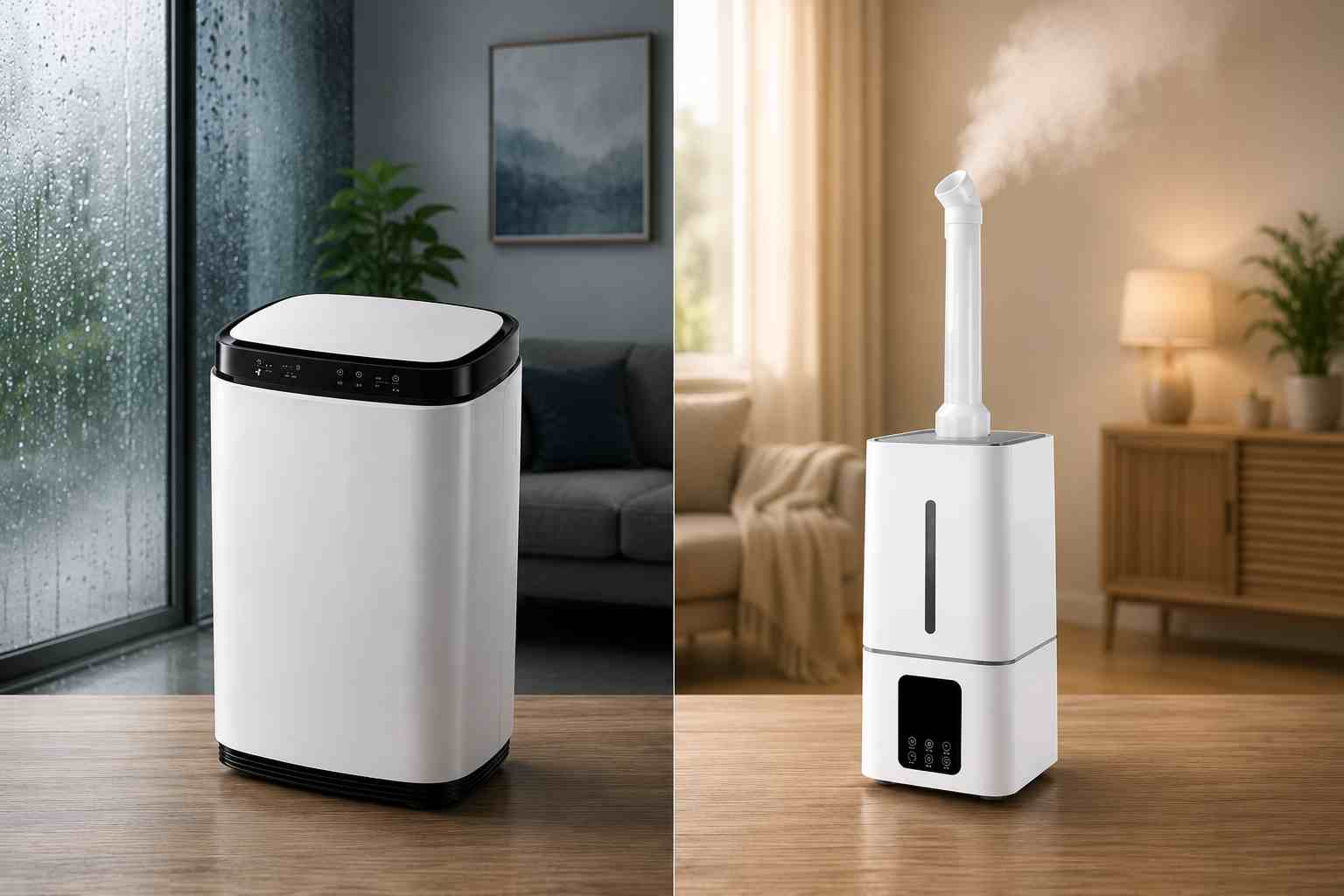
If you've ever searched for ways to fix "bad air" at home or in the office, you've probably come across both dehumidifiers and humidifiers. They sound similar and are often confused for one another, but they actually do the exact opposite job. Choosing the wrong one won't just fail to fix your problem. It could make it worse.
What Is a Dehumidifier?
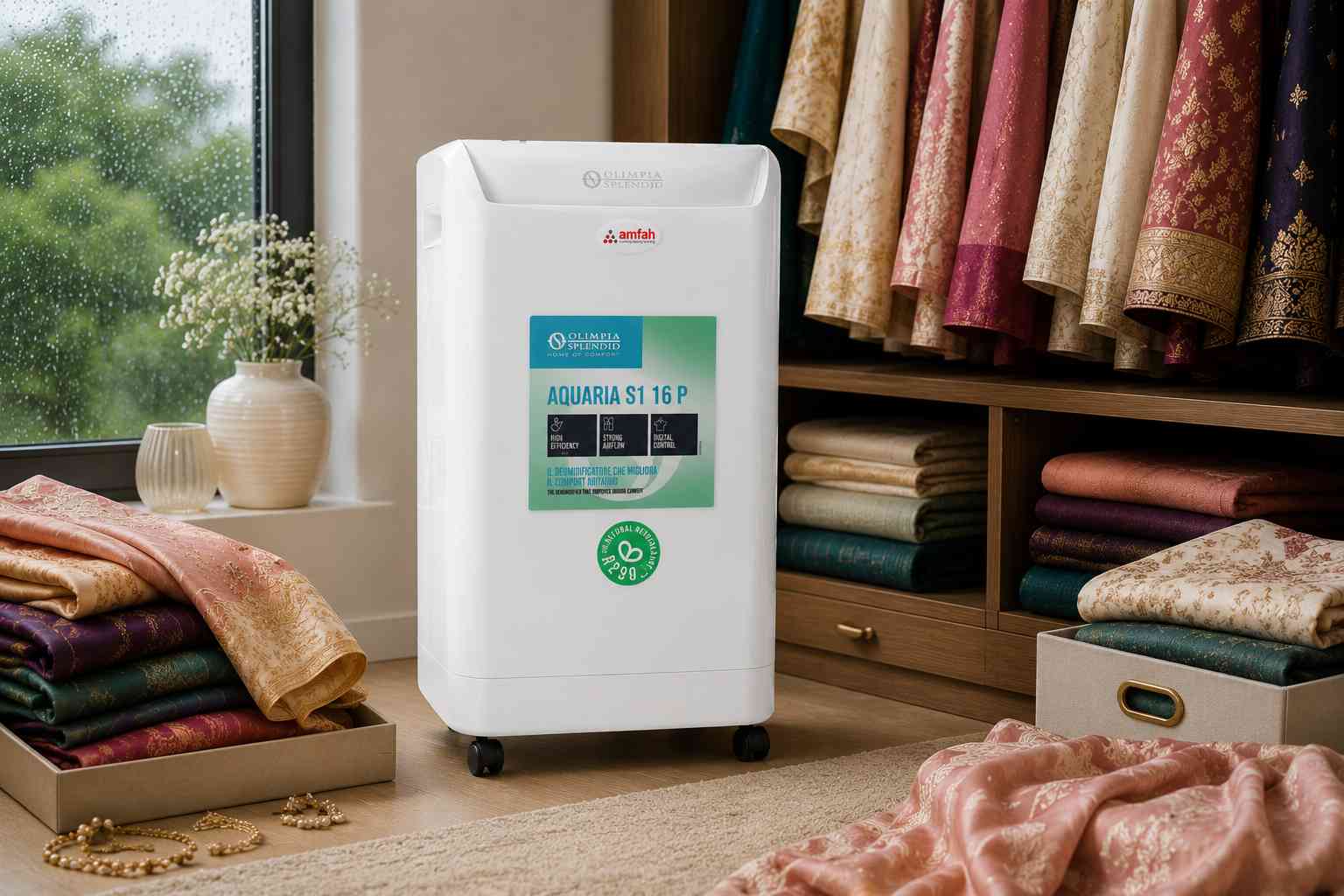
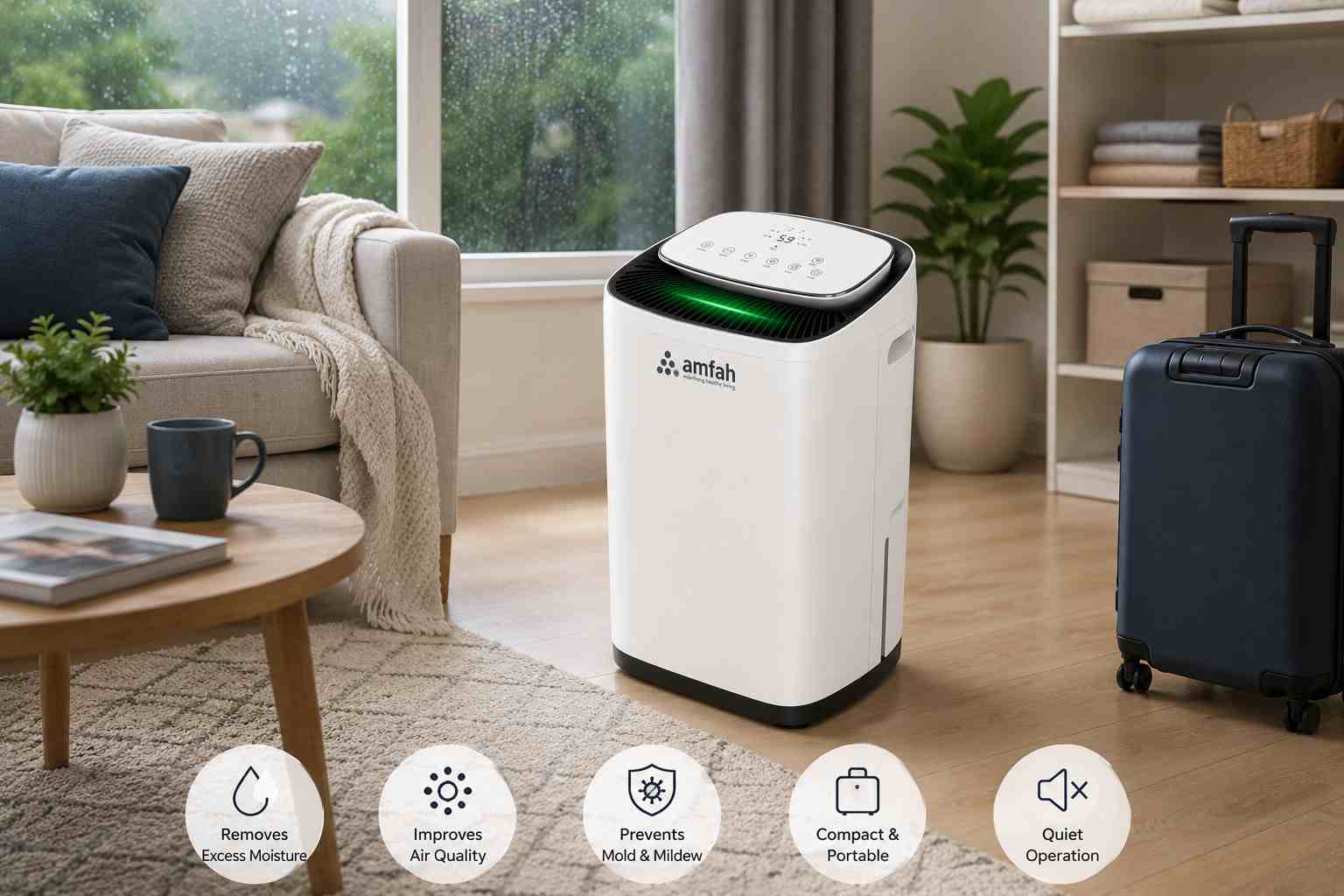
A dehumidifier removes excess moisture from the air. It pulls in humid air, cools it to condense the moisture out (or uses a desiccant material to absorb it), and releases drier air back into the room. The collected water is stored in a tank or drained out through a pipe.
You should consider a dehumidifier if you notice a musty or damp smell in a room, condensation on windows or walls, mould or mildew growth in corners, bathrooms, or basements, a sticky, heavy feeling in the air, or warped wood, peeling paint, or damp fabric and furniture.
What Is a Humidifier?
A humidifier does the opposite. It adds moisture to dry air, releasing water vapour or fine mist into a room to raise the humidity level and make the air feel less dry.
You should consider a humidifier if you're dealing with dry, itchy skin or chapped lips, frequent nosebleeds or a dry throat, especially in winter, static electricity around the house, cracking wooden furniture or flooring due to dryness, or generally dry indoor air, which is common in heavily air conditioned or heated spaces.
Key Differences at a Glance
| Feature |
Dehumidifier |
Humidifier |
| Function |
Removes moisture from air |
Adds moisture to air |
| Best for |
Humid, damp environments |
Dry environments |
| Common use cases |
Basements, monsoon season, storage rooms, factories |
Winter months, air conditioned offices, dry climates |
| Health benefit |
Reduces mould, allergens, dust mites |
Relieves dry skin, throat, and sinus irritation |
| Ideal humidity target |
Brings humidity down to 40-50% |
Brings humidity up to 40-50% |
How to Know Which One You Need
The simplest way to decide is to check your current indoor humidity with a hygrometer, a small and inexpensive device that measures relative humidity. If it's below 30%, your air is too dry and a humidifier will help. Between 40% and 50% is generally the ideal comfort range for most homes and offices. Above 60%, your air is too damp and a dehumidifier will help.
In many parts of India, especially during the monsoon and in coastal regions, dehumidifiers are far more commonly needed than humidifiers, since ambient humidity is naturally high for much of the year.
Can You Need Both?
Yes, in some cases. Larger homes or offices with different rooms facing different conditions, for example a damp basement versus a dry, air conditioned upper floor, may benefit from using both devices in different areas.
Final Thoughts
The choice between a dehumidifier and a humidifier comes down to one simple question. Is your air too wet, or too dry? Getting this right makes a real difference to comfort, health, and even the condition of your furniture and belongings.
Not sure which one fits your space? Amfah can help you assess your indoor humidity and recommend the right solution.