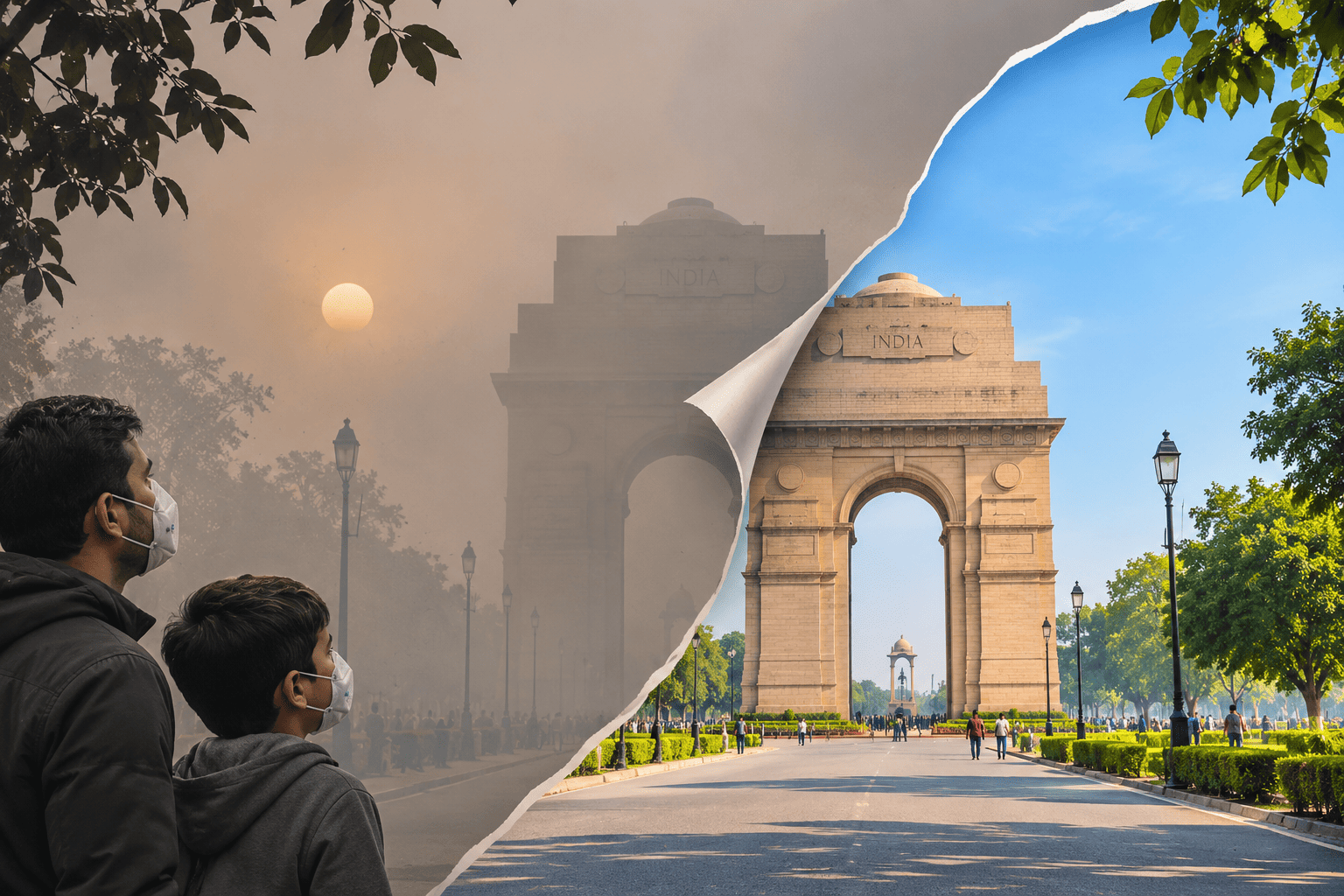
Delhi's air pollution has once again escalated to alarming levels as winter sets in. With dropping temperatures and calm winds, fine particulate matter (PM2.5) remains trapped near ground level, worsening air quality across Delhi-NCR into the "Very Poor" and "Severe" categories.
High AQI levels pose serious health risks for residents, especially children, elderly individuals, and those with existing respiratory conditions. Understanding what drives Delhi's severe winter pollution and how outdoor smog affects indoor environments is critical for protecting everyday health.
Delhi AQI Today: Latest Air Quality Situation
Delhi's Air Quality Index (AQI) fluctuates throughout the day based on local traffic, wind velocity, and ambient temperature. When air stagnation occurs, monitoring stations across Delhi frequently record AQI levels crossing 350 to 400+.
India's Central Pollution Control Board (CPCB) calculates a 24-hour average AQI, while live monitoring dashboards display real-time hourly spikes. Residents should monitor current local station readings before scheduling outdoor exercise or commutes.
Why Is Delhi AQI So High in Winter?
Delhi's severe winter air quality is caused by a combination of ongoing emission sources and seasonal meteorological conditions:
1. Temperature Inversion and Stagnant Winds
During winter months (October through January), cold air near the ground gets trapped beneath a layer of warmer air above—a phenomenon called thermal inversion. Combined with low wind speeds, pollutants from the entire region cannot disperse vertically or drift away, creating persistent, thick smog.
2. Vehicular Emissions
Millions of daily vehicles across Delhi-NCR produce heavy exhaust emissions, making transport the largest local contributor to fine particulate matter (PM2.5) and nitrogen dioxide (NO2).
3. Construction Dust and Road Dust
Unpaved roads, construction sites, and vehicular movement continuously resuspend fine mineral dust into the lower atmosphere.
4. Stubble Burning & Regional Biomass Combustion
Seasonal agricultural crop-residue burning in neighboring northern states releases dense plumes of smoke that drift across the Indo-Gangetic Plains, stacking on top of local urban emissions.
5. Industrial and Waste-Burning Emissions
Industrial activities around the NCR perimeter and open waste or biomass burning for warmth contribute soot and toxic chemicals to the city's air burden.
What Is PM2.5 and Why Is It Dangerous?
PM2.5 refers to microscopic airborne particles with a diameter of 2.5 micrometres or smaller—about 30 times finer than a strand of human hair. Because of their tiny size, these particles bypass upper respiratory filters, enter deep into the lungs, and can pass directly into the bloodstream.
Short-term exposure causes throat irritation, coughing, and burning eyes. Chronic exposure significantly elevates the risk of asthma attacks, bronchitis, heart disease, and reduced lung capacity.
Delhi AQI Levels: Understanding the Scale
India's National Air Quality Index (CPCB) classifies air quality into six health-based categories:
| AQI Range |
Air Quality |
Health Impact |
| 0–50 | Good | Minimal impact. |
| 51–100 | Satisfactory | Minor discomfort to sensitive individuals. |
| 101–200 | Moderate | Breathing discomfort to people with lung, asthma or heart conditions. |
| 201–300 | Poor | Breathing discomfort on prolonged exposure. |
| 301–400 | Very Poor | Respiratory illness on prolonged exposure. |
| 401–500 | Severe | Affects healthy individuals and severely impacts vulnerable groups. |
How Outdoor Pollution Affects Indoor Air
Staying indoors offers partial protection, but outdoor PM2.5 micro-particles easily infiltrate homes through window gaps, door crevices, and air conditioning vents. Once inside, stagnant indoor air can accumulate high particulate concentrations alongside indoor allergens
- Use an Air Purifier: Operating an air purifier equipped with a high-efficiency HEPA filtration system helps continuously capture fine particulate matter and improve indoor breathing conditions.
- Control Indoor Moisture: Closed windows can lead to trapped moisture, creating musty odors and dust mite proliferation. Dehumidifiers help regulate excess humidity and maintain balanced indoor comfort.
Frequently Asked Questions About Delhi AQI
1. What is the AQI of Delhi today?
Delhi's AQI varies across monitoring stations and times of day. Check the official CPCB SAMEER app or the Delhi government environment dashboard for live hourly updates.
2. Why does air pollution worsen in Delhi during winter?
Cooler temperatures, reduced wind speed, and atmospheric thermal inversion trap vehicular, industrial, and dust emissions close to the ground, preventing smoke dispersion.
3. What is the highest AQI level in India?
India's National AQI scale tops at 500. Any reading between 401 and 500 is classified as "Severe."
4. Does an air purifier help during high AQI days?
Yes. A properly sized HEPA air purifier operating in an enclosed room can filter out up to 99% of airborne PM2.5 particles, significantly lowering indoor pollution exposure.
5. Does a dehumidifier remove air pollution?
A standard dehumidifier extracts excess humidity from the air. To remove fine particulate pollution like PM2.5, an air purifier or a specialized hybrid unit with HEPA filtration is needed.
Conclusion
Delhi's winter pollution is a systemic environmental challenge driven by weather patterns and urban emissions. While regional solutions require time, keeping indoor living and working spaces clean through proper HEPA filtration and balanced humidity is an essential, practical step to protect your respiratory health throughout the winter season.