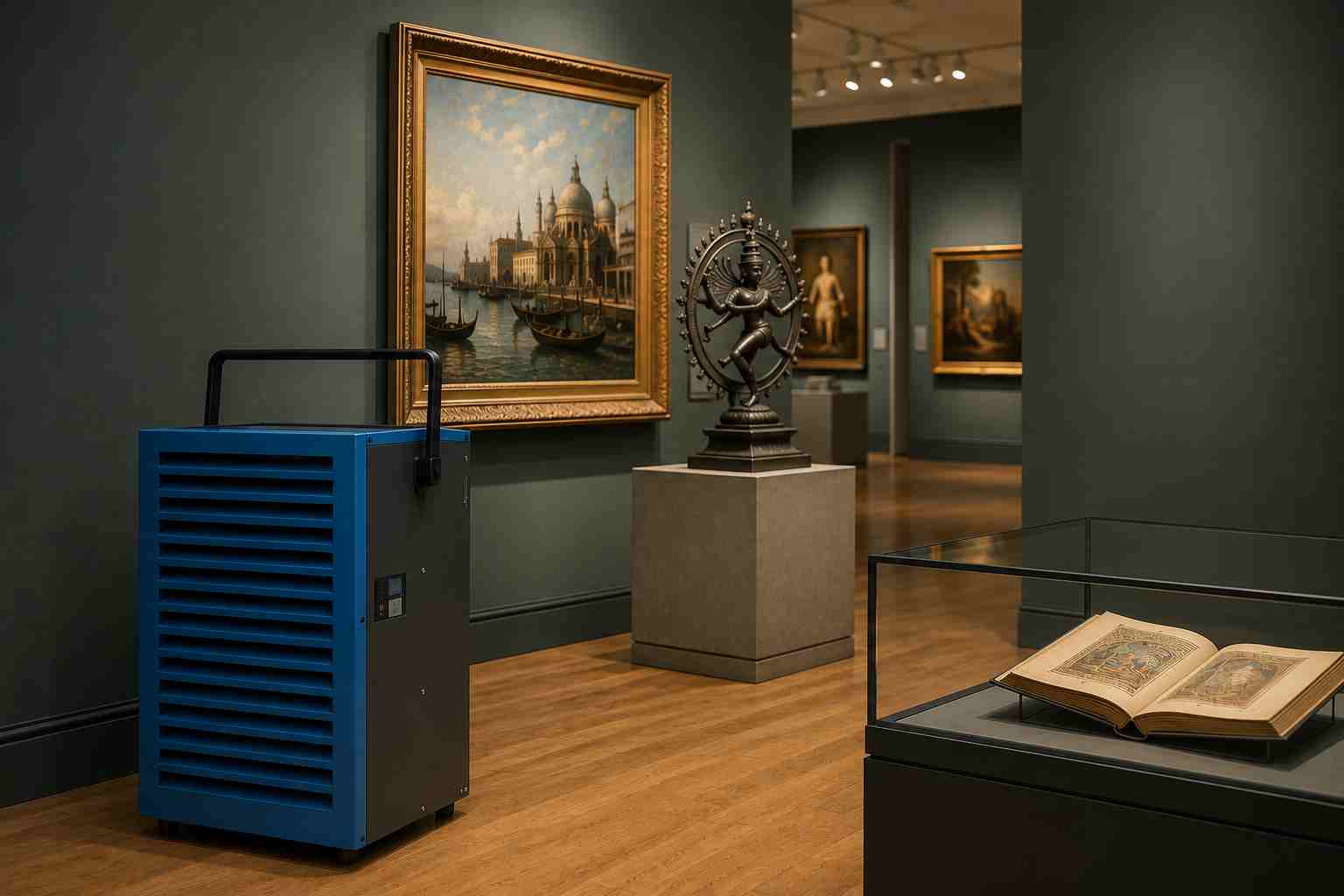
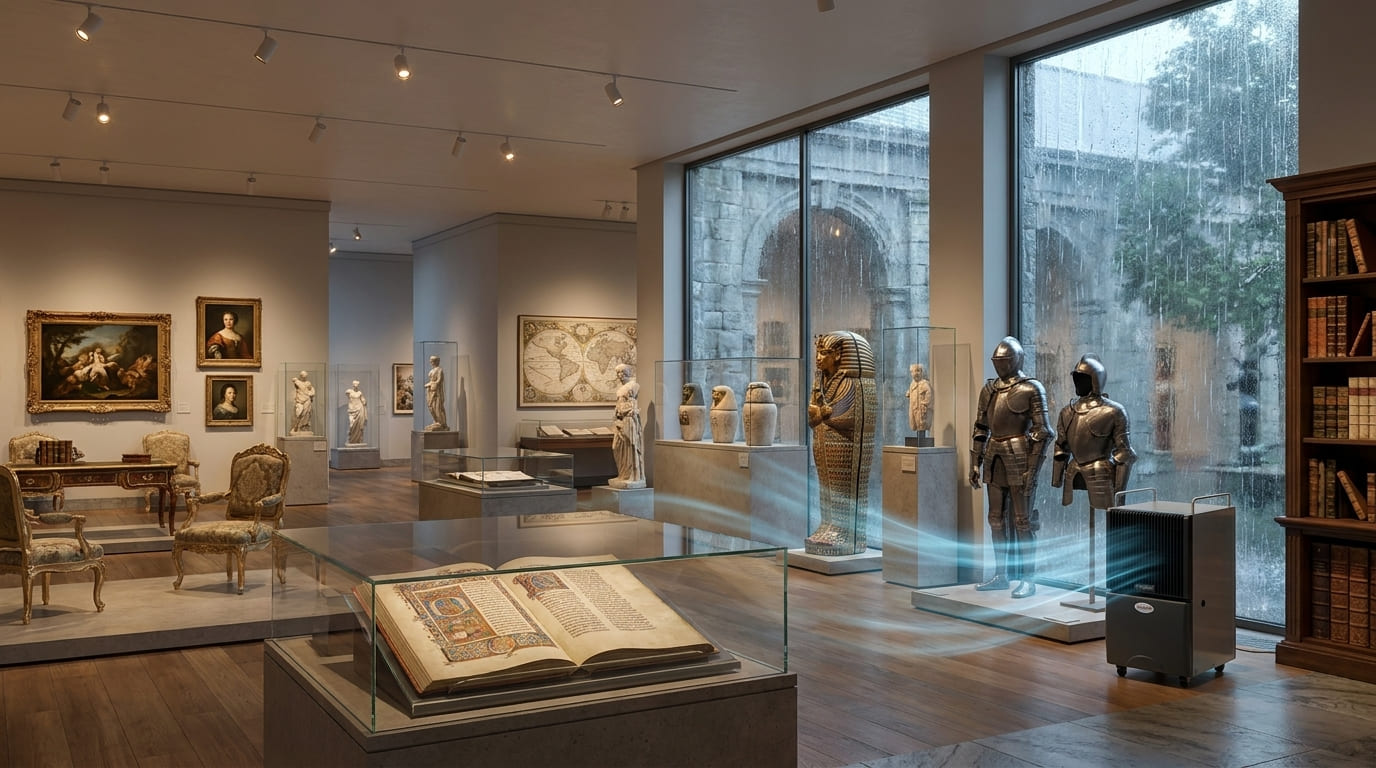
Every painting, sculpture, and artifact in a museum or gallery is affected by the air around it, whether anyone notices or not. Humidity is one of the most damaging yet invisible threats to art and historical objects, slowly working away at materials that took years, decades, or centuries to create.
Why Art and Artifacts Are So Sensitive to Humidity
Museums and galleries house a wide range of materials, and each reacts differently to moisture. Canvas absorbs and releases moisture with changes in humidity, causing it to expand and contract. Over time, this leads to cracking, warping, and paint flaking off the surface.
Wood is highly reactive to humidity changes as well. It swells in damp conditions and shrinks when dry, leading to cracks, warping, and joint failure in furniture, frames, and sculptures. Bronze, iron, and other metal objects corrode faster in humid environments, sometimes developing a damaging patina that eats into the original surface. Sketches, manuscripts, and prints suffer the same problems as archival documents, including brittleness, foxing (brown spots), and mould growth. Tapestries, costumes, and fabric based exhibits can develop mould, weaken, or discolour when exposed to fluctuating humidity too.
The Ideal Humidity Range for Museums
Most conservation guidelines recommend keeping gallery and storage humidity between 45% and 55% relative humidity, with minimal fluctuation. Stability is often more important than hitting an exact number. Rapid swings in humidity cause more physical stress on materials than a slightly higher but steady level.
How Dehumidifiers Help Preserve Collections
Dehumidifiers play a central role in museum and gallery climate control. They maintain consistent humidity levels across display and storage areas, preventing the expansion and contraction cycles that crack paint and warp wood. They also reduce the risk of mould growth on textiles, paper, and organic materials, slow corrosion on metal artifacts and hardware, and protect the long term value and integrity of the collection overall.
Beyond the Public Galleries
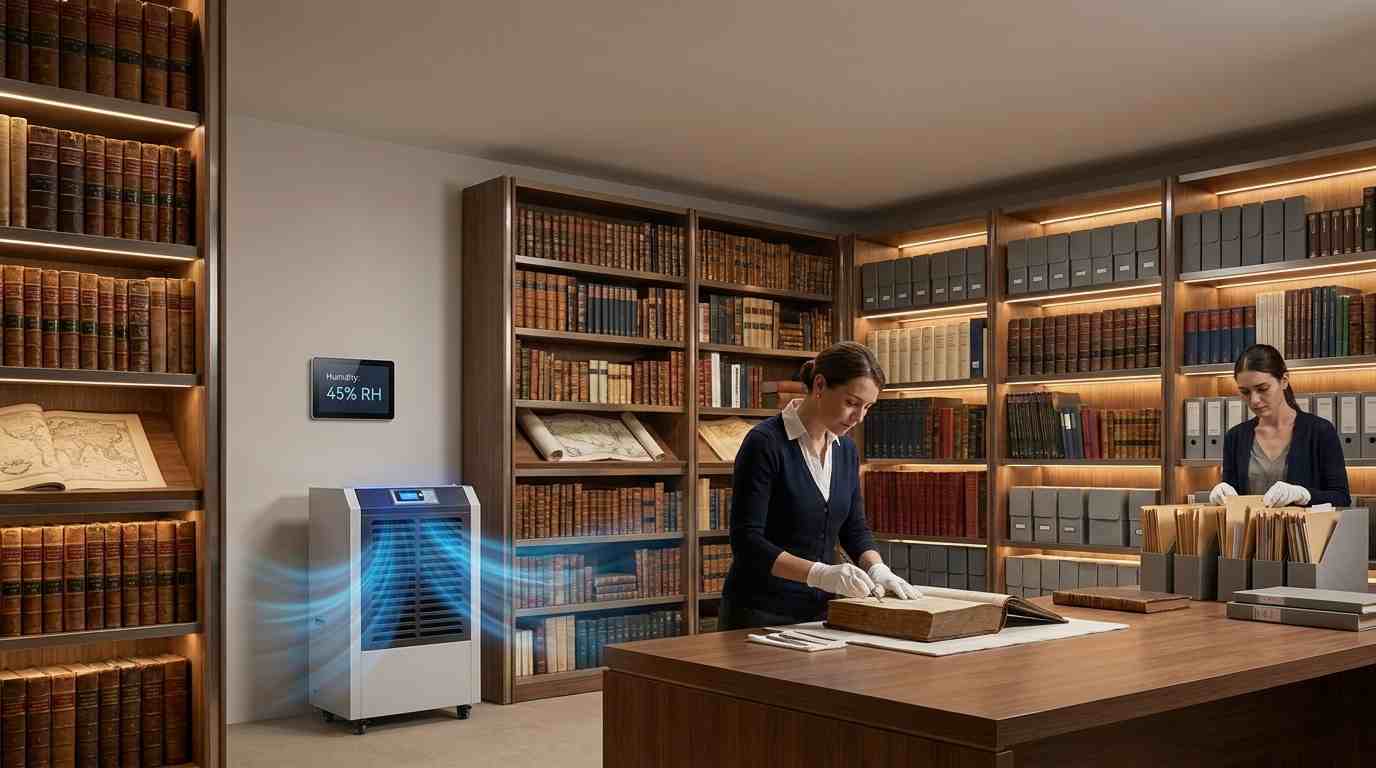
Humidity control matters just as much, if not more, in areas the public never sees. Storage vaults and archives hold the bulk of a collection between exhibitions. Restoration and conservation labs need stable conditions for delicate work. Transport and packing areas are where artifacts are especially vulnerable during handling.
Working Alongside Climate Control Systems
Museums typically pair dehumidifiers with broader HVAC and climate control systems, along with continuous humidity monitoring. This combination ensures that even as outdoor weather changes throughout the year, the internal environment protecting the collection stays stable.
Final Thoughts
Art and historical artifacts are, by definition, irreplaceable. The right humidity control setup, built around reliable dehumidification, is one of the most important investments a museum or gallery can make in protecting its collection for future generations.
Amfah provides precision dehumidification solutions for museums, galleries, and conservation spaces. Contact us to discuss protecting your collection.