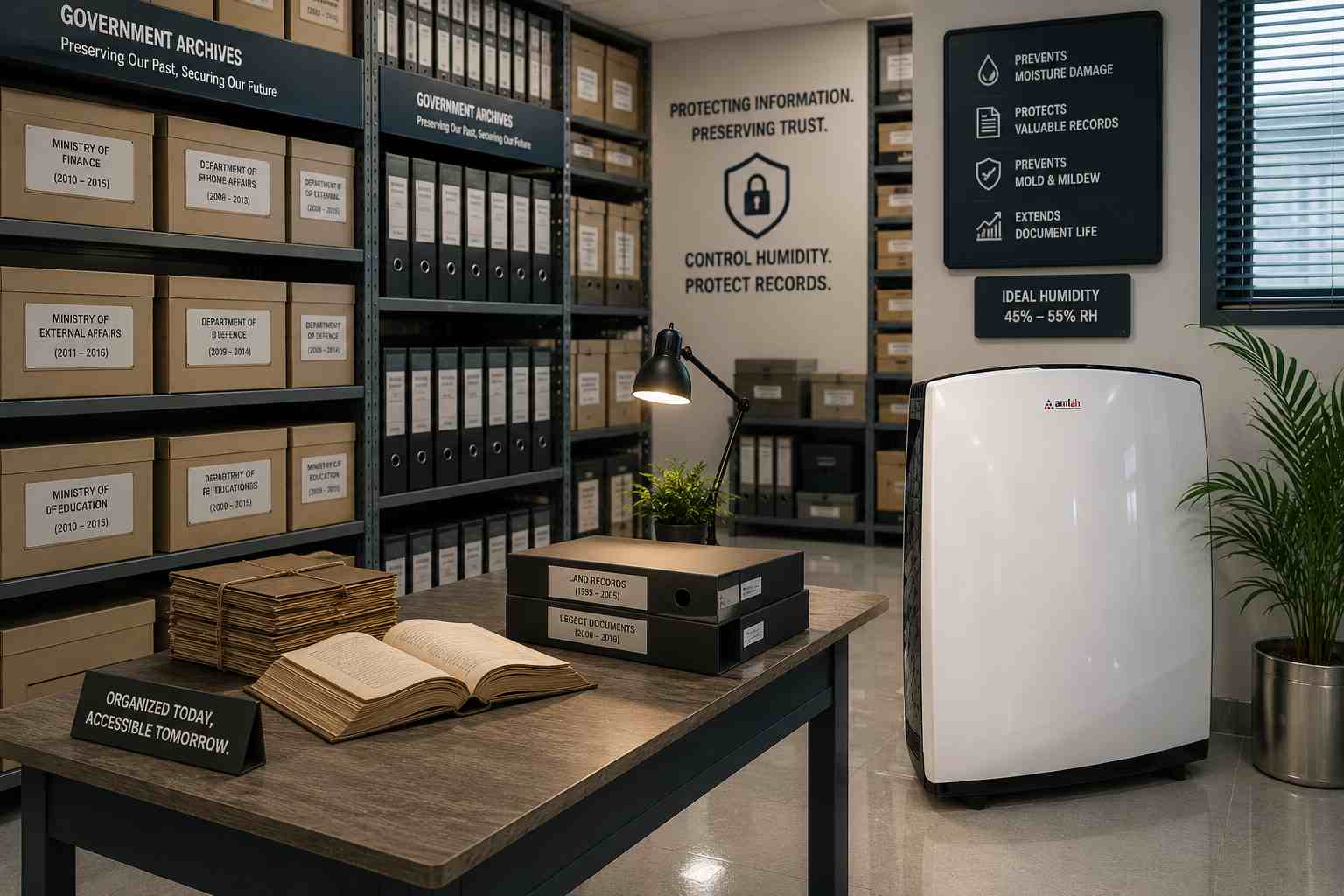
Paper doesn't last forever, especially not in a humid environment. Government archives and corporate record rooms often store documents that are decades old, and in many cases, irreplaceable. Once humidity damages them, that history or legal record is often gone for good.
How Humidity Damages Paper Records
Paper absorbs moisture from the air, which weakens its fibres over time. Documents become brittle, discoloured, or start to crumble when handled. Moisture can also cause ink to bleed, smudge, or fade, making old records difficult or impossible to read.
Humid, poorly ventilated storage rooms are ideal breeding grounds for mould. Once mould takes hold on paper, it spreads quickly and can destroy entire boxes of records. Damp paper and cardboard boxes also attract silverfish, cockroaches, and other pests that feed on paper and glue, causing further damage. Books, bound registers, and files can warp, swell, or develop mildew on their covers when stored in humid conditions.
Why This Matters for Government & Corporate Archives
Government archives often hold legal records, land documents, court files, and historical materials that have no digital backup and cannot be recreated. Corporate record rooms store financial records, contracts, HR files, and compliance documents that may be needed for audits or legal purposes years later. In both cases, losing access to these records isn't just inconvenient. It can have serious legal, financial, or historical consequences.
The Ideal Humidity Range for Archives
Archival standards typically recommend maintaining relative humidity between 35% and 50%, with many conservation guidelines pointing to around 45% as ideal for paper based records. Consistency matters as much as the exact number. Frequent fluctuations in humidity cause more damage than a stable, slightly higher level.
How Dehumidifiers Help Protect Records
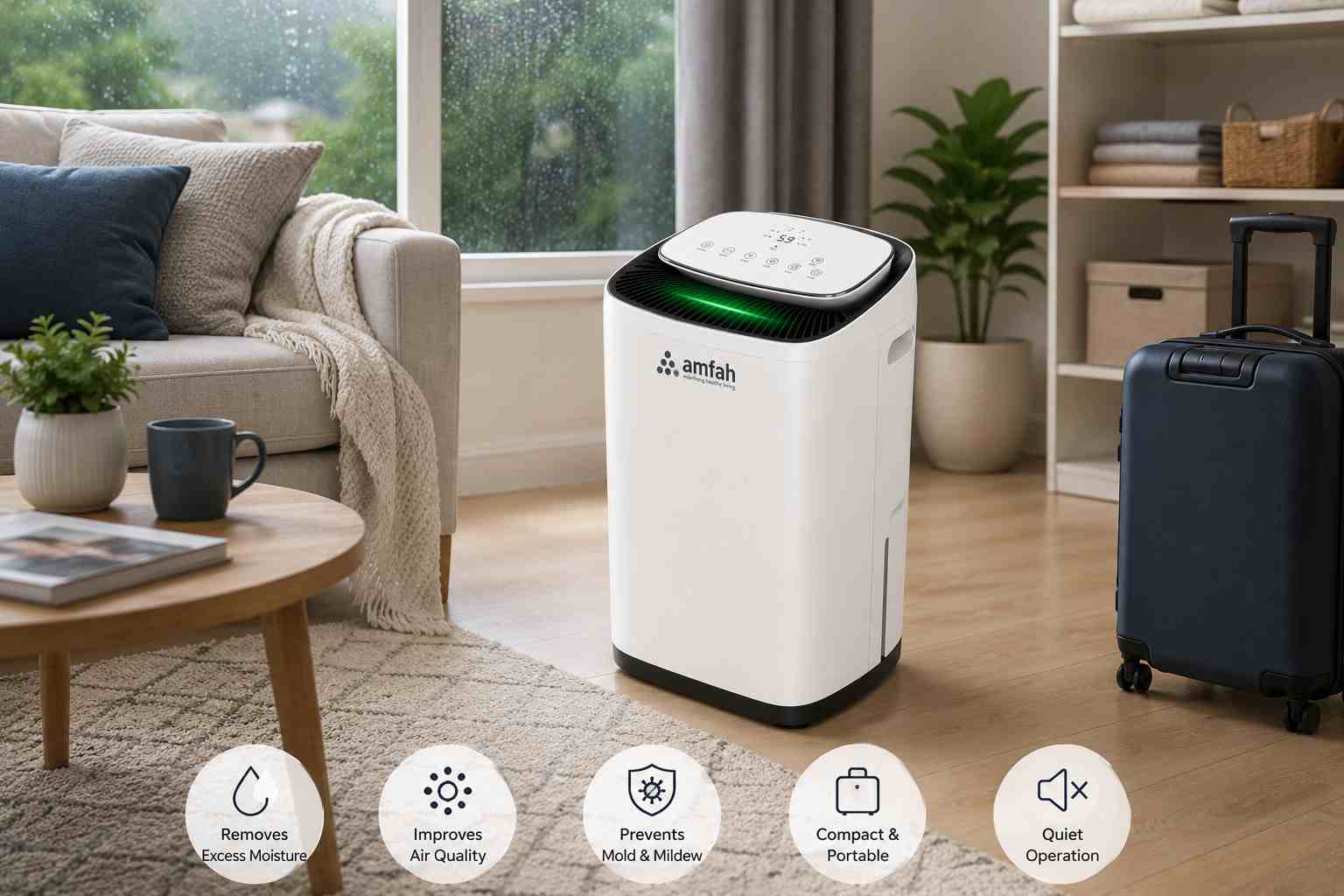
Installing dehumidifiers in archive rooms and record storage areas helps maintain stable humidity levels throughout the year, regardless of season. It prevents mould and fungal growth on paper, bindings, and boxes, slows down the natural ageing and brittleness of paper, reduces pest problems linked to damp storage conditions, and protects the long term legibility and physical integrity of documents.
Additional Best Practices
Along with dehumidification, well managed archives typically also use sealed, ventilated storage rooms away from external walls prone to dampness, acid free boxes and folders to reduce chemical degradation, regular monitoring with hygrometers to track humidity levels, and elevated shelving to avoid moisture damage from flooring dampness.
Final Thoughts
Whether it's a government archive preserving historical records or a corporate office storing years of compliance documents, humidity control is one of the most overlooked yet essential parts of records management. A dehumidifier is a small investment that protects records that, in many cases, simply cannot be replaced.
Amfah offers dehumidification solutions designed for archives, libraries, and record storage facilities. Get in touch to protect what matters.