Summer has arrived. You have just moved into a new apartment and the afternoon heat is becoming difficult to handle. The room gets hot, you cannot concentrate on your work, and sleeping at night becomes uncomfortable. Naturally, the first thing that comes to mind is a split AC.
Sometimes, Installing an AC Is More Complicated Than You Think
You call an installer. Then you start hearing about wall drilling, copper pipes, an outdoor unit, drainage, electrical work and installation charges.
If you own the house, this may not be a big concern. But what if you're renting? What if your landlord doesn't want holes drilled into the wall? What if your office is rented and you may move to another location next year? Or what if you simply don't want to disturb a newly painted wall or expensive interior?
This is where a portable AC can make life much easier. A portable air conditioner gives you proper air conditioning without turning the cooling system into a permanent part of the building.
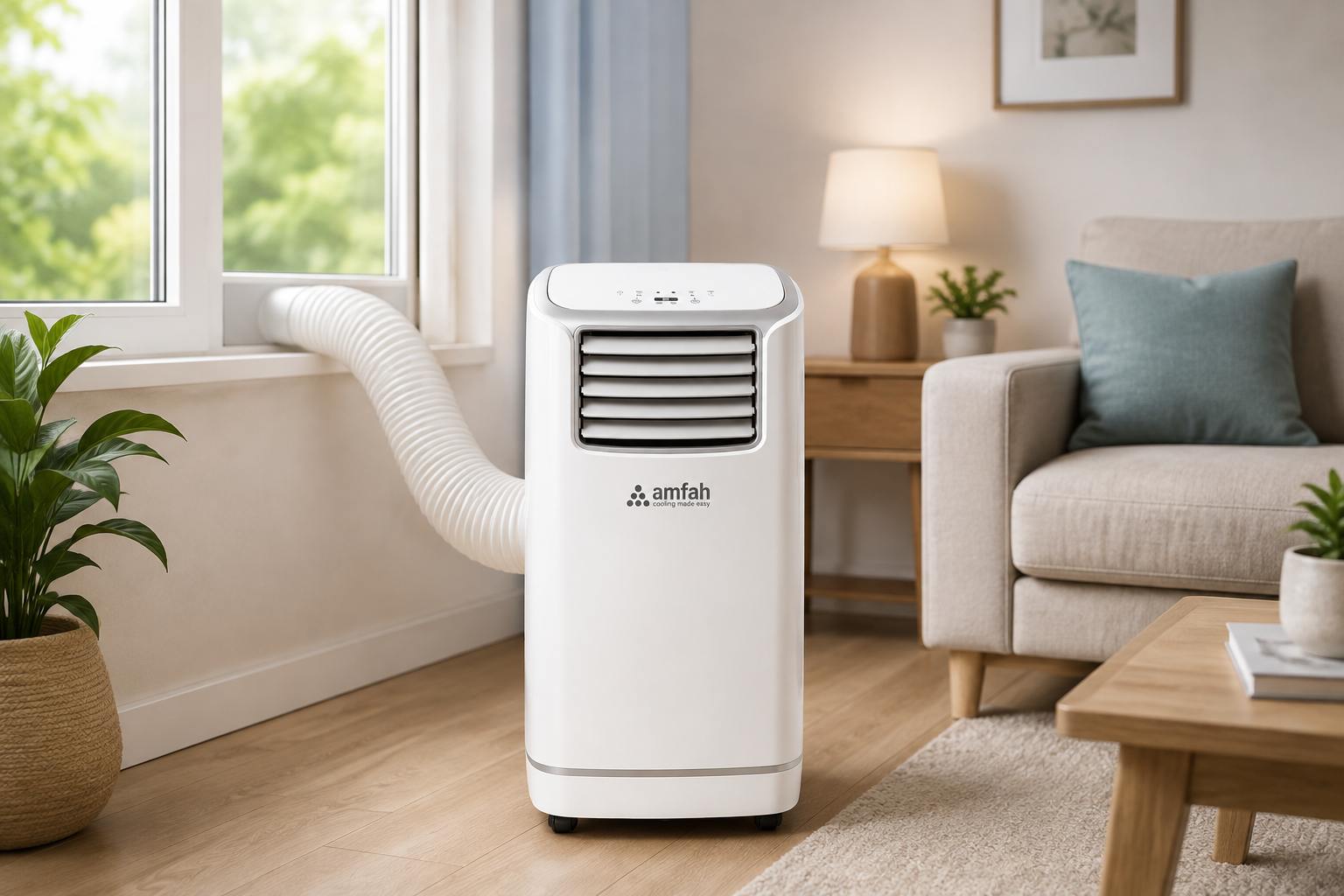
You can place it inside the room, connect the exhaust arrangement to a suitable window and start using it. And when your requirements change, you can move the unit. That's the biggest difference between a portable AC and a traditional split AC.
What Is a Portable AC?
A portable AC is a self-contained air conditioning unit designed to sit on the floor and provide cooling without the permanent installation normally associated with a split AC. The main components are contained inside the portable unit.
It draws warm air from the room, cools it and releases cool air back into the room. The heat removed from the room needs to be sent outside, which is why portable ACs normally use an exhaust hose connected to a suitable window or opening.
Most portable ACs are also fitted with wheels, so the unit can be moved when required.
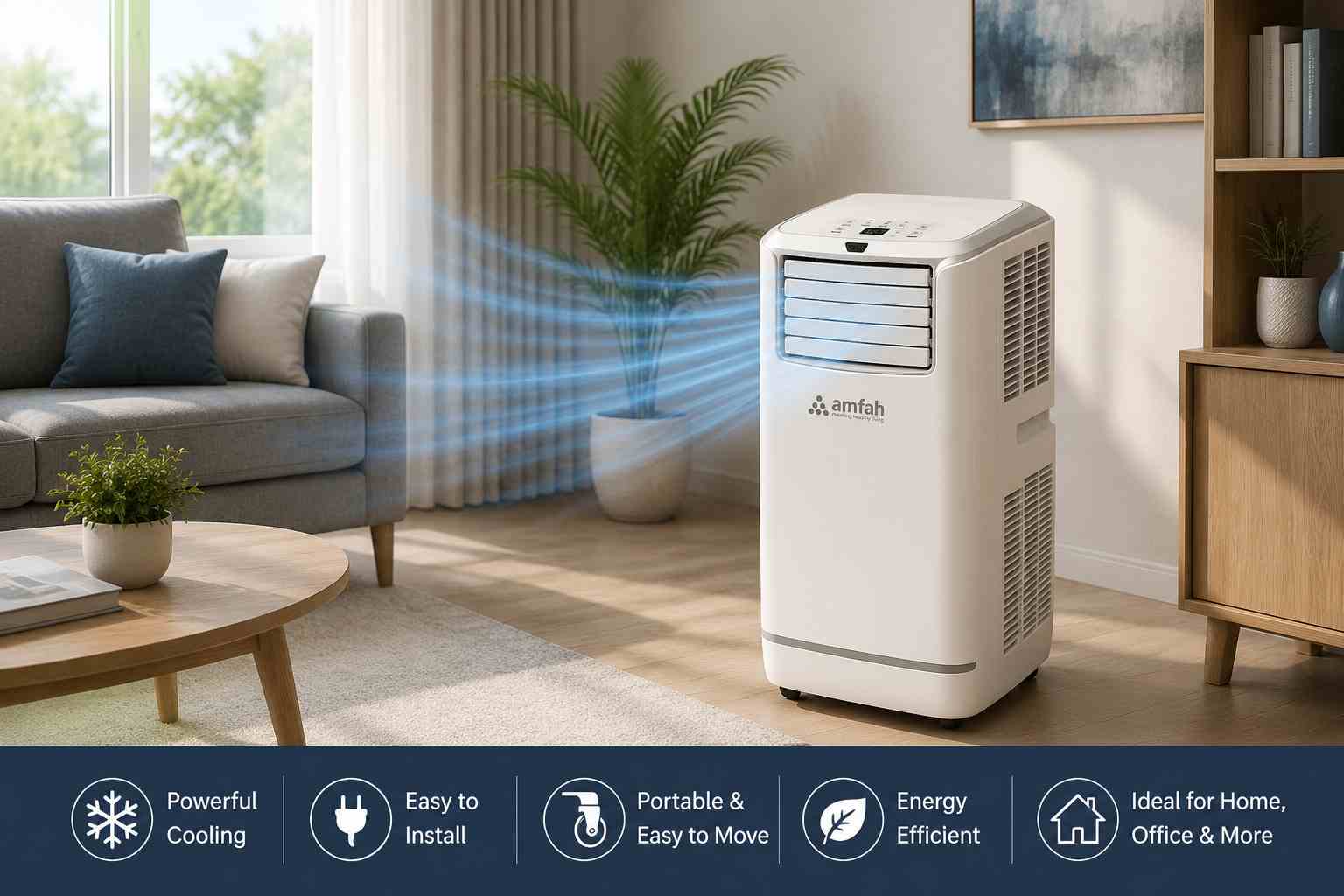
This simple design makes portable air conditioning useful for homes, rented apartments, offices, shops, temporary workspaces and many other situations where permanent AC installation isn't convenient.
A Split AC Changes Your Wall Permanently
This is something people often don't think about before buying a split AC. A split AC isn't simply mounted on the wall.
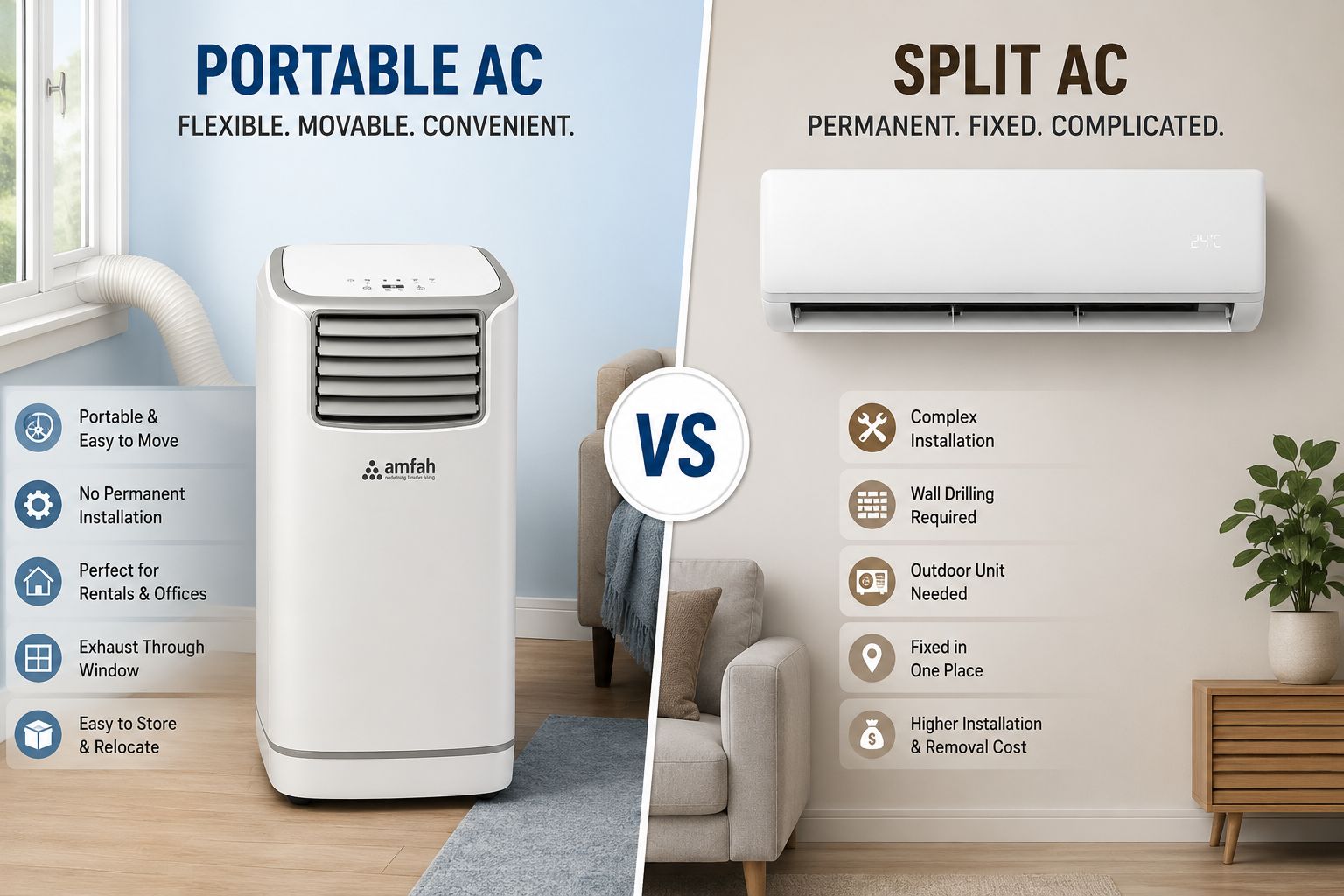
The indoor unit needs to be fixed using a mounting bracket. A passage also has to be created through the wall for the refrigerant pipes, electrical connections and drain pipe. The outdoor unit then needs to be installed in a suitable location outside the room.
This means drilling and installation work becomes part of the process. Current installation guidance and comparisons describe wall mounting, wall openings, pipe routing and outdoor-unit placement as part of a conventional split AC installation.
Think about a freshly painted bedroom. You have spent money on a beautiful wall finish. Now the AC installation requires drilling and pipe routing through that wall. The work can be done professionally, but the wall is still being modified to accommodate the AC.
And when you eventually remove the split AC, you may be left with mounting holes and openings that need to be sealed, repaired or repainted. For a permanent home, many people are comfortable with this. For a rented apartment or temporary office, it can become an unnecessary headache.
Portable AC Doesn't Require the Same Permanent Wall Installation
This is where portable AC has a clear advantage. Instead of mounting an indoor unit on the wall, the portable AC simply stands on the floor.
There is no indoor unit to permanently fix. There is no outdoor compressor unit hanging outside the building. There is no need to route copper refrigerant pipes across the wall in the same way as a conventional split installation.
The portable unit generally uses an exhaust hose and window kit to send hot air outside. You still need to set up the exhaust properly, but the overall arrangement is much less permanent. For people who don't want to make major changes to their property, this can be a huge advantage.
Why Portable AC Is Perfect for Rental Homes
Imagine living in a rented apartment. You may stay there for six months. Or maybe two years. You don't know yet.
Installing a split AC means making changes to someone else's property. You may need the owner's permission before drilling the wall. The building may also have rules about installing outdoor AC units. And when you eventually move, you have to arrange for the AC to be removed and installed again somewhere else.
A portable AC makes this much easier. You can use the unit in your rented home without installing a permanent indoor unit. When you move, the AC moves with you.
This is one of the main reasons portable ACs are increasingly being considered by renters and people who frequently change homes. Recent Indian comparisons also highlight rental homes and properties where permanent installation is restricted as strong use cases for portable air conditioners.
What About Offices?
Portable ACs aren't only useful for homes. Think about a small office. The company has rented the space for a few years, but the building owner doesn't want permanent changes to the walls. Or perhaps the company has created a temporary office for a new project.
There may be a meeting room that gets hot during the afternoon. Maybe a cabin has poor airflow. Maybe the office has recently added more computers and the room now feels warmer than before.
Installing a complete split AC system may take planning, permission and installation work. A portable AC can be brought into the office and set up with much less disruption.
This makes portable air conditioners useful for:
- Office cabins
- Meeting rooms
- Temporary offices
- Reception areas
- Small commercial spaces
- Rented workspaces
- Shops
- Clinics
- Temporary project offices
For businesses, the ability to move the cooling equipment when the office layout changes can be extremely useful.
You Don't Need an Outdoor AC Unit
Walk around an apartment building and you'll notice outdoor AC units everywhere. Some buildings have dedicated spaces for them. Others don't.
In certain apartments, finding a suitable place for an outdoor unit can be difficult. In offices, building management may have restrictions on external installations. In rented properties, the landlord may not want additional equipment installed outside.
A portable AC avoids the need for a conventional outdoor compressor unit. The cooling system remains inside the room, while the hot air is exhausted outside through the appropriate hose arrangement. This makes the installation cleaner and much easier to manage when permanent outdoor equipment isn't practical.
Installation Becomes Much Easier
A conventional split AC installation involves several steps: the indoor unit needs to be mounted, the outdoor unit needs to be positioned, the wall needs to be drilled, pipes and wiring need to be routed, the drain system needs to be arranged, and then the entire system needs to be tested.
Portable AC installation is much simpler. You place the unit near a suitable window, attach the exhaust hose and window kit according to the manufacturer's instructions, and connect the unit to power.
The exact setup depends on the model, but portable ACs are designed around this simpler installation process. For someone who wants cooling without a major installation project, that simplicity is a major benefit.
What Happens When You Move?
This is where the difference becomes even more obvious. A split AC is designed to stay where it is installed. If you move to another home, you need to arrange for dismantling, transportation and reinstallation. The old wall may also need repair after the unit and pipes are removed.
With a portable AC, the process is much simpler: disconnect the unit, move it, and set it up again. The cooling system isn't tied to one building.
For students, renters, people who relocate for work and businesses that frequently change offices, this flexibility can be extremely valuable.
Portable AC Is Also Useful for Temporary Cooling
Not every cooling requirement lasts for years. A business may set up a temporary office. A company may renovate its main workplace and move employees into another building for a few months. An exhibition may run for several days. A shop may need additional cooling during a temporary setup. A construction company may need cooling inside a temporary office cabin.
Installing a permanent split AC for a short-term requirement doesn't always make sense. A portable AC can be moved into the space, used during the required period and relocated when the work is finished. This is one of the biggest strengths of portable air conditioning.
Portable AC Gives You More Freedom With Your Interior
Modern homes and offices are no longer designed only around functionality. People spend a lot of money on interiors: wooden wall panels, wallpaper, decorative ceilings, designer paint, built-in furniture, and minimalist interiors.
A wall-mounted split AC can become another element that has to be planned into the room. The installation also requires a route for the pipes and drain line.
A portable AC takes a different approach. The unit stays on the floor and doesn't require a permanently mounted indoor unit. For people who want to avoid extensive wall work, this can make the cooling system much easier to integrate into the room.
Portable AC During the Indian Summer and Monsoon
India doesn't have just one type of weather. Summer can bring extreme heat, while the monsoon brings high moisture along with warm temperatures. This combination can make indoor spaces feel uncomfortable.
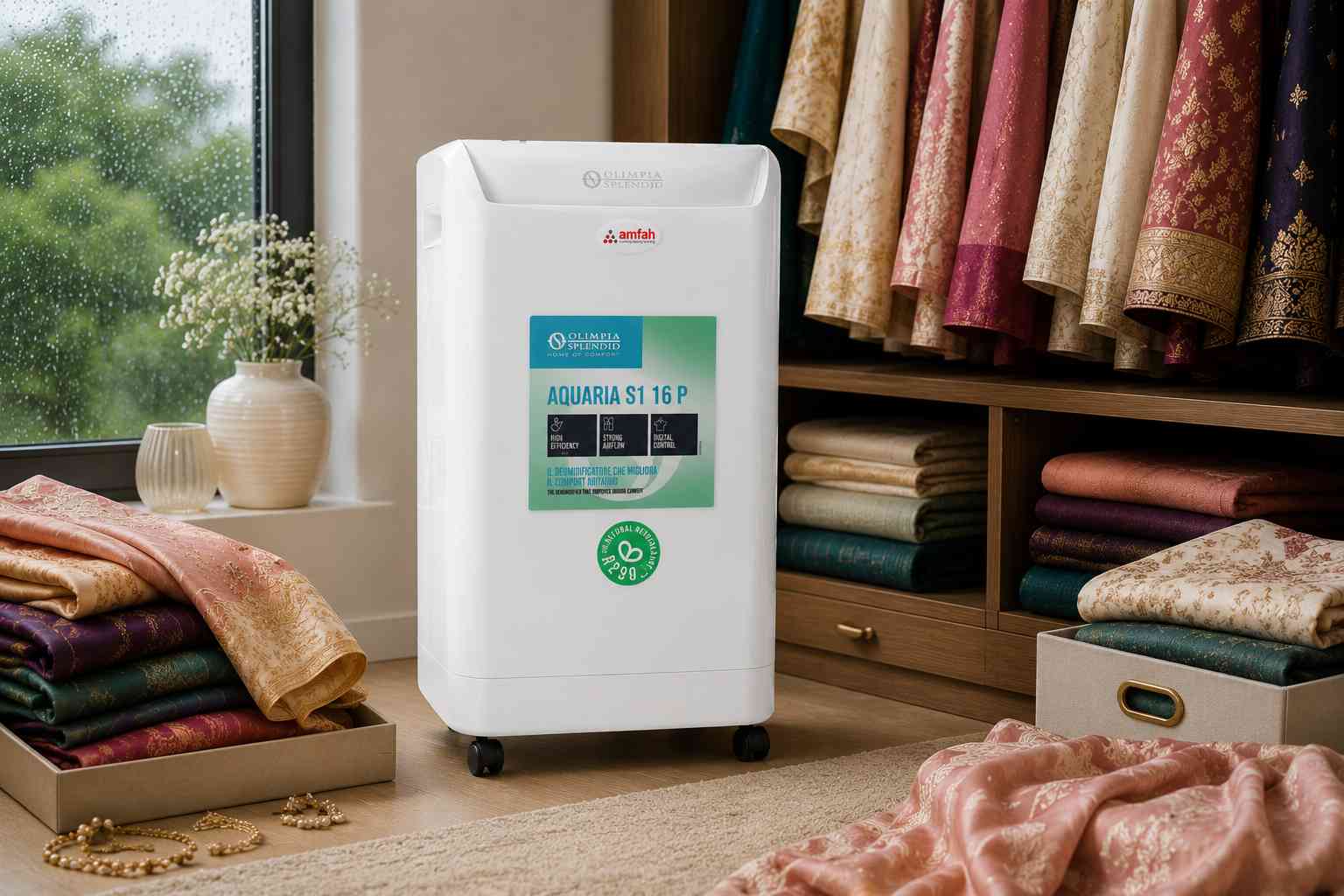
A portable AC helps by lowering the room temperature. Some portable AC models can also remove moisture during the cooling process and may include a dedicated dehumidification mode. This can be especially useful when the room feels both hot and humid.
However, if the main problem is excessive humidity rather than temperature, a dedicated dehumidifier is designed specifically for moisture control. That's why cooling and humidity control should be considered separately when choosing equipment for your home or workplace.
Why Portable AC Is the Better Choice for Flexible Spaces
A split AC works around the building. A portable AC works around your requirements. That's a major difference.
If you move to another room, another office or another property, your cooling requirement moves with you. You don't have to redesign the space around a permanently installed AC. You don't have to find a place for an outdoor compressor. You don't have to make the same wall modifications required for a conventional split installation.
You simply move the unit, set it up correctly and continue using it. That flexibility is what makes portable AC a better option for many modern homes and workplaces.
What About Electricity Consumption?
Portable ACs are designed for convenience and flexibility, but electricity consumption is still something users should consider. The actual power consumption depends on the model, cooling capacity, room size, insulation, outdoor temperature and how long the unit runs.
The important thing is to choose a portable AC that is properly matched to the room and use it in a well-sealed space. Keeping doors and windows closed while the AC is operating can also help maintain the cooled environment. Using the correct exhaust setup is equally important because the hot air removed from the room needs to be properly discharged outside.
Portable AC for Modern Work and Living
Our homes and workplaces are changing. People work from home. Companies rent flexible offices. Businesses move locations. Students shift between accommodation. Families move into new apartments. Temporary workspaces are becoming common.
In all these situations, permanent cooling isn't always the most convenient answer. Portable AC gives people the ability to have air conditioning without making the building permanently dependent on the cooling system. And that is what makes it different.
Portable AC vs Split AC: Which One Fits Your Needs?
If you want permanent cooling and don't mind modifying the building, a split AC requires a conventional installation. But if you want flexibility, mobility and a simpler setup, portable AC offers a much more convenient alternative.
| Feature / Consideration |
Portable AC |
Split AC |
| Installation Complexity |
Plug-and-play; DIY window kit exhaust hose |
Professional drilling, piping & electrical work required |
| Wall Modifications |
Zero holes drilled; preserves interior walls |
Mounting brackets & 3-inch wall core holes |
| Outdoor Unit Required |
No outdoor condenser unit needed |
Requires exterior wall or balcony mounting space |
| Mobility & Relocation |
Easy to move on caster wheels room-to-room or house-to-house |
Fixed to one spot; costly de-installation and wall repair |
| Best Application |
Rented homes, flexible offices, temporary project sites, cabins |
Permanently owned homes with fixed cooling layouts |
- For renters: Portable AC means less concern about permanent wall changes.
- For offices: It means easier installation in rented or temporary spaces.
- For businesses: It means cooling equipment that can move as requirements change.
- For homeowners: It means another option when installing an outdoor unit isn't practical.
The biggest advantage isn't complicated technology. It's convenience.
The Future of Flexible Cooling
Cooling should make your life easier, not create another installation problem. You shouldn't have to redesign a rented apartment just to stay comfortable. You shouldn't have to worry about permanent wall work every time you change your office. And you shouldn't have to leave your cooling system behind when you move.
Portable air conditioning offers a simple answer to these problems.
AMFAH portable AC solutions are designed for homes, offices and commercial spaces where convenient and flexible cooling matters. With a movable design and a simpler installation approach, portable AC gives you the freedom to bring cooling wherever it is needed without committing to a permanent split AC installation.
When your space changes, your cooling solution can change with it. That's what makes portable AC a smarter choice for modern, flexible spaces.
Explore AMFAH Portable Air Conditioners & Flexible Cooling Solutions