
Buying GuidesAugust 29, 20267 min read
What Size Dehumidifier Do I Need?
Find out what size dehumidifier you need for your room based on room size, humidity levels, moisture sources, and usage. A simple guide for Indian homes and offices.
 |The Most Preferred Brand on the Government e-Marketplace (GeM) Portal
 |The Most Preferred Brand on the Government e-Marketplace (GeM) Portal.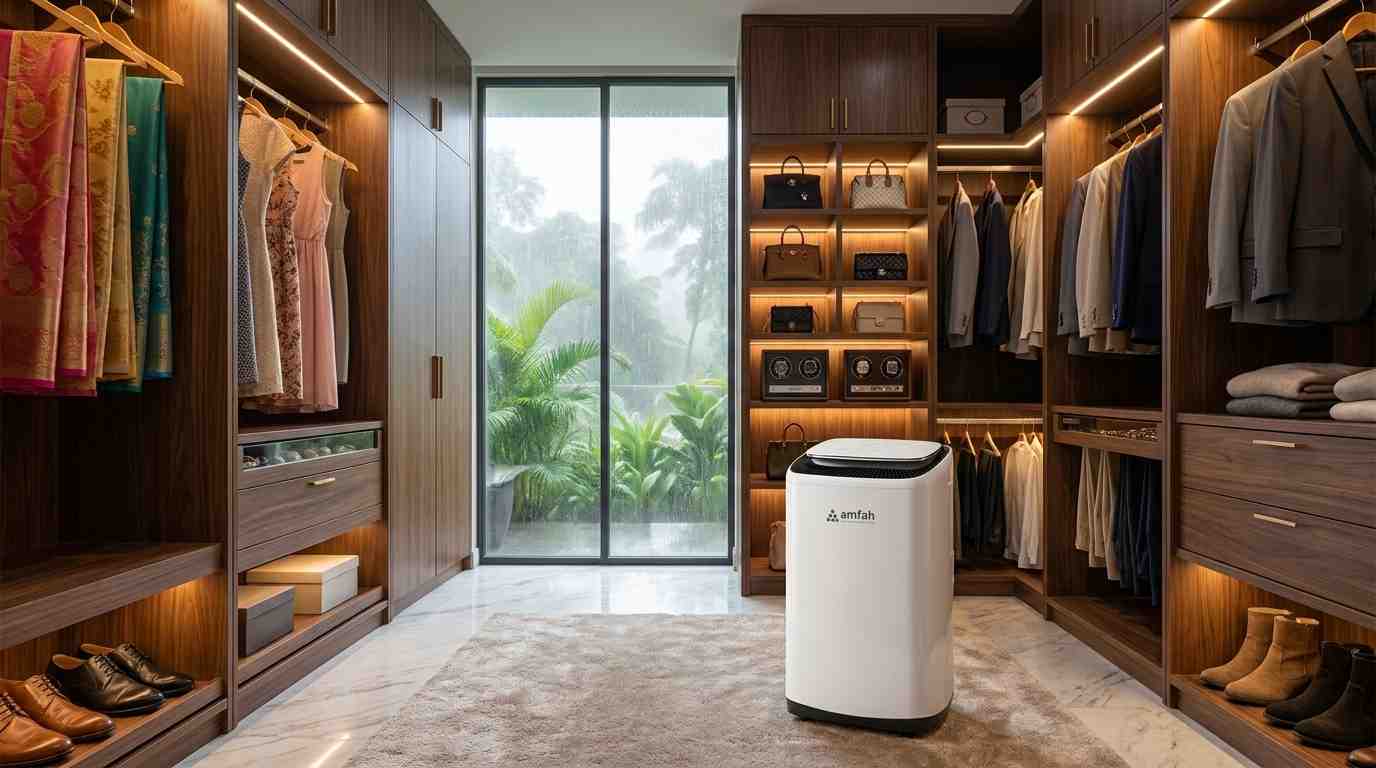
Humidity ruins clothes, shoes, and handbags in walk-in closets. Learn the warning signs and how a dehumidifier keeps yours fresh and mold-free.
Most people design a walk-in closet around lighting, shelving, and layout, how it looks, not what's happening inside the air. But the one thing that quietly undoes all that planning is humidity, and it rarely gets a second thought until something's already ruined.
A walk-in closet is essentially a sealed box. It stays shut most of the day, gets almost no cross-ventilation, and unlike a bedroom or living room, nobody's opening a window in there. So if the rest of your home runs even slightly humid, which is common through the monsoon or in any coastal city, that moisture has nowhere to escape once it drifts in. It just sits, and builds.
The EPA's position on this is simple: mold needs moisture to grow, full stop. A closet that stays closed and slightly damp for weeks at a time is close to ideal conditions for it.
That's the part people underestimate. A walk-in closet usually holds more than clothing, leather bags, formal shoes, silk sarees, wool jackets, jewelry boxes, sometimes the wooden shelving itself. All of it is exposed to the same air, and natural materials like silk, wool, suede, and leather absorb moisture far more readily than synthetic fabrics do.
Humidity rarely wrecks anything overnight. It's slow, which is exactly why people miss it. First it's a faint musty smell when you open the door. Then a bag develops a light white bloom of fungus, or a pair of shoes loses its shine for no obvious reason. Wooden shelves start feeling faintly tacky to the touch. None of these look urgent in isolation, but by the time you notice two or three of them together, the moisture's usually been sitting there for weeks already.
Left long enough, this shows up as:
For a small space with mild humidity, sure, they help for a while. The problem is they saturate fast, especially through a long monsoon, and once they're full, they stop doing anything until replaced. If the room around the closet is genuinely humid, absorbers are treating a symptom, not the source.
A dehumidifier doesn't work shelf by shelf it brings down humidity across the whole room, which means the closet stops re-absorbing moisture from the air around it. Practically, that means clothes hold their fresh smell longer, leather stays supple instead of developing fungus, wood doesn't warp, and you stop getting that faint musty hit every time you open the door.
The EPA recommends keeping indoor humidity between 30–50%, and below 60% at the outside limit. That's a reasonable target in most rooms, much harder to hold inside a sealed closet without something actively pulling moisture out.
Even with a dehumidifier running, some basic habits go a long way:
If you're storing bridal wear, silk sarees, a real handbag collection, leather shoes, or seasonal clothing that sits untouched for months, this matters more than it does for an everyday wardrobe. Same if you're in Mumbai, Goa, or anywhere else that sees a proper monsoon, the humidity load is simply higher, and a bigger walk-in closet means more surface area exposed to it.
The closet is an investment, and so is everything hanging in it. AMFAH's residential dehumidifiers are built to hold indoor humidity in the range that actually protects fabric, leather, and wood, quietly, in the background, without you having to think about it every day.
Find out what size dehumidifier you need for your room based on room size, humidity levels, moisture sources, and usage. A simple guide for Indian homes and offices.
Discover why portable ACs are becoming popular in India and how they offer flexible cooling for homes, rental properties, offices, and commercial spaces.
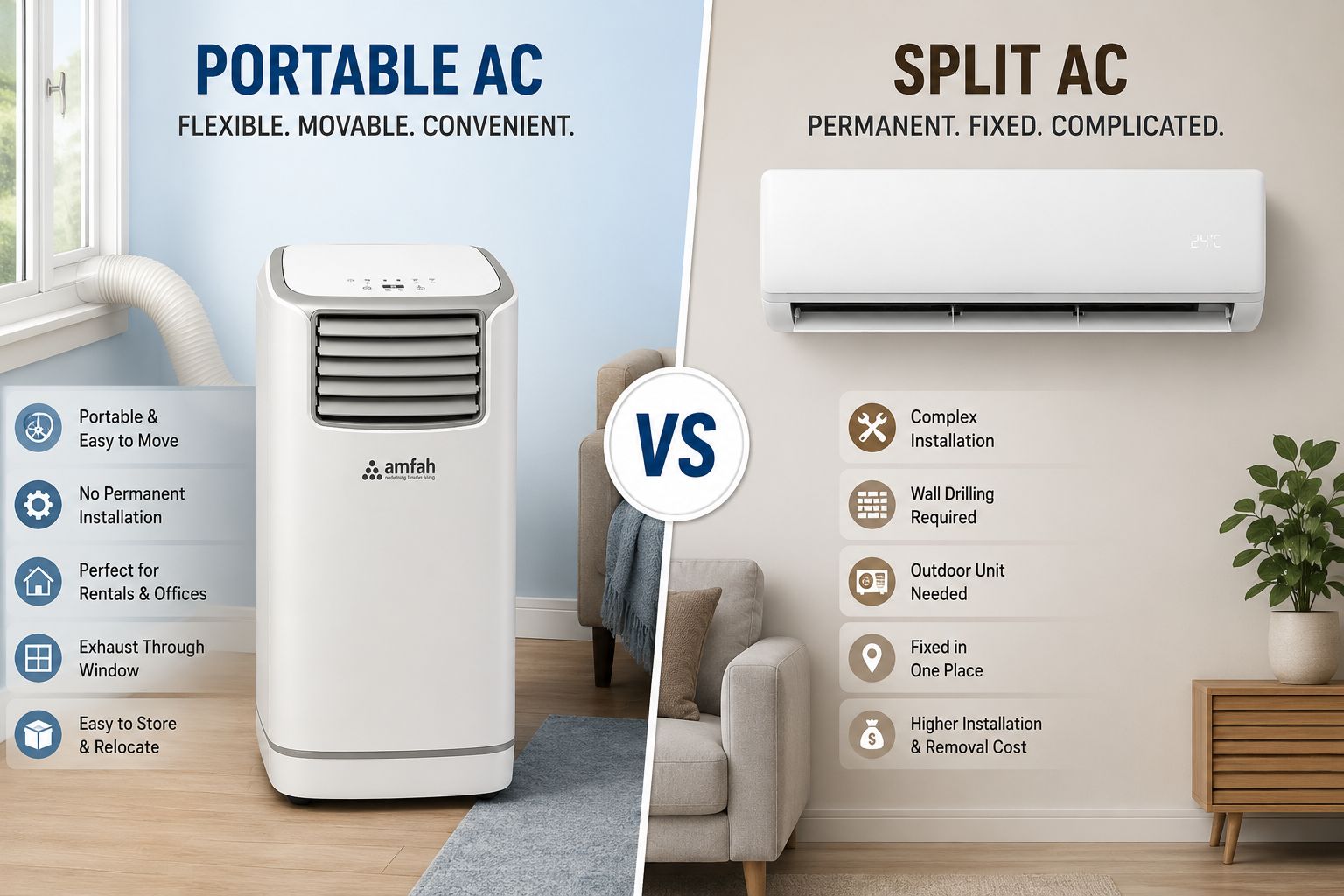
Compare portable AC vs split AC to understand installation, portability, wall damage, cooling, and why portable AC is a practical choice for homes, offices, and rental spaces.
Our Senior indoor air consultants are online to draft complete thermodynamic calculations for industrial cleanrooms, warehouses, data grids, or residential spaces.