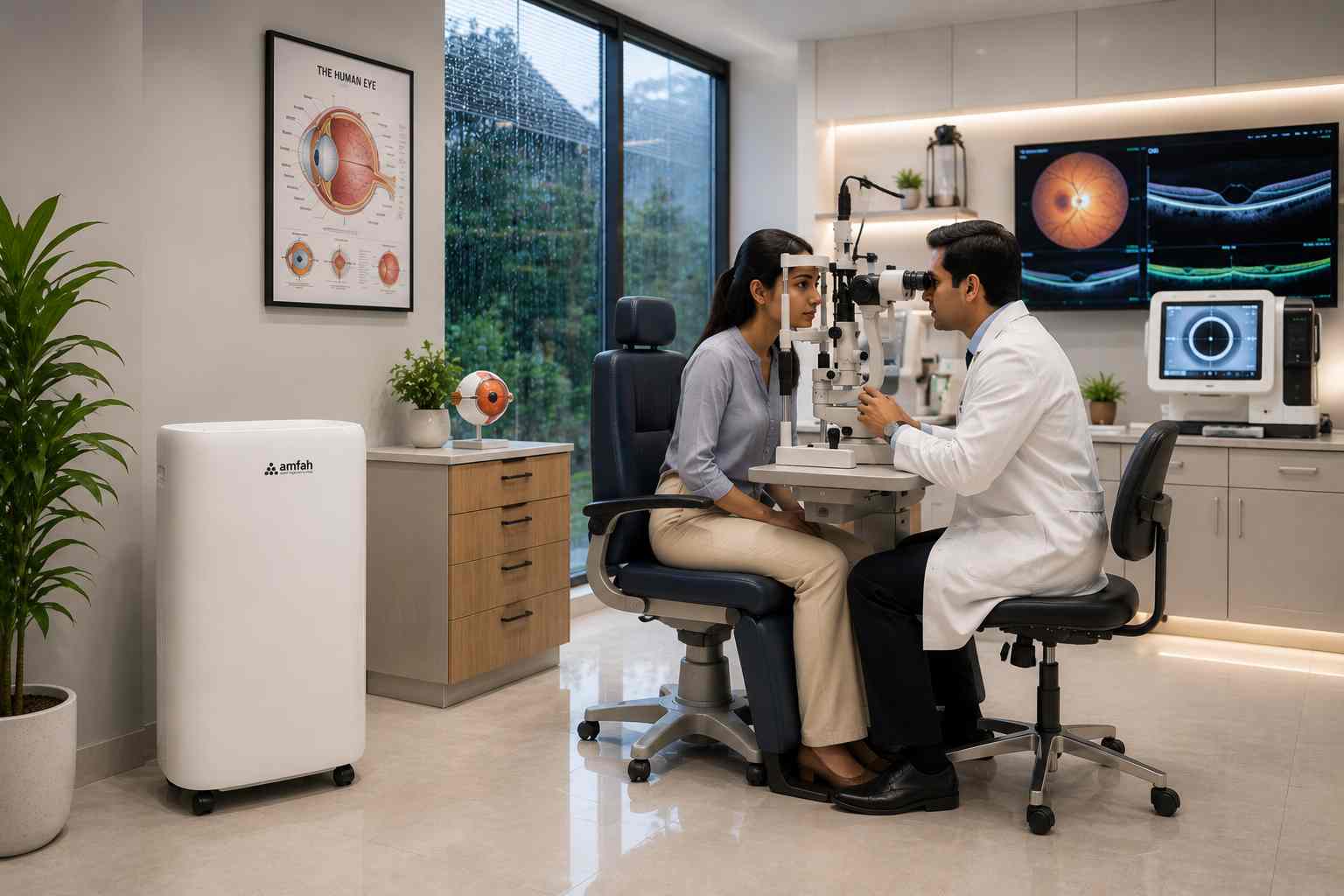
It's just after 8 o'clock in the morning. The doors of the eye hospital open, and the first patients slowly begin to arrive.
An elderly man is waiting for his cataract surgery. A college student has come for a vision test after struggling to read classroom presentations. A young child sits beside her parents, nervous about her very first eye examination.
Inside the hospital, the day has already started.
Doctors prepare for consultations, nurses organize patient files, and technicians switch on the diagnostic equipment that will be used throughout the day.
Everything feels calm, clean, and well organized.
But there is one part of the hospital that almost nobody notices — the air.
Temperature is easy to feel. Humidity isn't.
Yet it quietly affects the comfort of patients, the condition of medical equipment, and the overall environment inside the hospital.
The Rain Outside Doesn't Always Stay Outside
During the monsoon season, every hospital faces the same challenge.
Patients enter with umbrellas and raincoats. Doors open hundreds of times throughout the day, allowing humid outdoor air to move inside.
Even when the air conditioning is running, some rooms can still feel slightly damp.
Mirrors may collect moisture in the morning. Windows sometimes develop tiny droplets of water. Storage rooms may lose that fresh feeling after several rainy weeks.
These small changes happen so slowly that they're easy to ignore.
But over time, excess humidity begins affecting different parts of the hospital.
Modern Eye Care Depends on Modern Technology
Years ago, eye examinations relied mainly on basic instruments.
Today, technology plays a much bigger role.
A patient visiting an eye hospital may undergo several different tests before meeting the doctor.
The eyes are examined using slit lamps that magnify tiny structures with remarkable clarity.
OCT scanners produce detailed images of the retina within seconds.
Fundus cameras capture photographs that help doctors monitor eye diseases over time.
Autorefractors quickly measure vision before a detailed examination begins.
These machines work continuously from morning until evening.
They represent a significant investment for every hospital.
Providing a stable indoor environment helps support the long-term care of these valuable systems.
Every Surgery Demands a Controlled Environment
Imagine a patient waiting outside the operation theatre for cataract surgery.
Inside, the medical team is preparing for the procedure.
Every instrument has been sterilized.
The surgical microscope is positioned carefully.
The operating lights are adjusted.
Everything is checked before the first incision is made.
Hospitals pay close attention to cleanliness, airflow, and temperature because every detail matters.
Humidity is another part of creating a stable indoor environment.
Balanced humidity helps maintain comfortable conditions for surgeons, nurses, and support staff while supporting the overall environment inside the operation theatre.
Comfort Matters More Than Most People Realize
Patients visiting an eye hospital are often anxious.
Some worry about losing their vision.
Others are preparing for surgery they've never experienced before.
The environment around them plays an important role in helping them feel comfortable.
A fresh waiting area. Clean examination rooms. Comfortable consultation cabins.
These small details build confidence before the doctor even begins the examination.
When humidity remains too high, indoor spaces can feel sticky and uncomfortable, especially during long monsoon seasons.
Maintaining balanced humidity helps hospitals create a cleaner and more welcoming atmosphere for everyone who walks through the door.
The Hospital Keeps Working After the Last Patient Leaves
When visiting hours end, the work doesn't stop.
Technicians clean and prepare diagnostic equipment for the next day. Medical supplies are restocked. Operation theatres are cleaned. Patient records are updated. Backup equipment is returned to storage.
These behind-the-scenes activities are just as important as patient care.
Storage rooms often contain expensive ophthalmic equipment, packaged medical supplies, disposable consumables, and important hospital documents.
Keeping these areas dry helps maintain better storage conditions throughout the year.
Humidity Can Affect More Than One Department
People often think humidity is only a problem inside operation theatres.
In reality, it can influence many different areas of an eye hospital.
- Reception Area: Welcomes hundreds of visitors every day and should always feel fresh and comfortable.
- Consultation Rooms: Benefit from a pleasant indoor environment where doctors spend long hours examining patients.
- Diagnostic Rooms: Contain sophisticated imaging equipment that operates throughout the day.
- Storage Areas: Hold valuable medicines, consumables, and packaged supplies that need organized storage conditions.
- Administrative Offices & Record Rooms: Benefit from maintaining balanced humidity, helping paper records remain in good condition for longer.
Humidity control supports the entire hospital — not just one department.
Isn't Air Conditioning Enough?
This is one of the most common questions hospital owners ask.
"If every room already has air conditioning, why would we need a dehumidifier?"
The answer is simple.
An air conditioner is mainly designed to reduce temperature.
A dehumidifier is designed to reduce excess moisture in the air.
During humid weather, especially in coastal cities and throughout the monsoon season, indoor humidity can remain high even when the rooms feel cool.
That's why many hospitals use dedicated humidity control systems alongside their existing air conditioning.
Both systems work together, but each has a different purpose.
A Small Change That Makes a Big Difference
Humidity is invisible. Patients don't ask about it. Doctors rarely talk about it.
Yet controlling it helps create a hospital that feels cleaner, fresher, and more comfortable every single day.
It also supports better care of valuable medical equipment and helps maintain organized storage conditions across different departments.
Sometimes the biggest improvements come from things people never notice.
Creating a Better Environment for Patients and Staff
Every eye hospital works hard to provide excellent patient care.
Doctors bring years of experience. Modern technology supports accurate diagnosis. Dedicated healthcare professionals keep everything running smoothly.
Creating the right indoor environment is another part of that commitment.
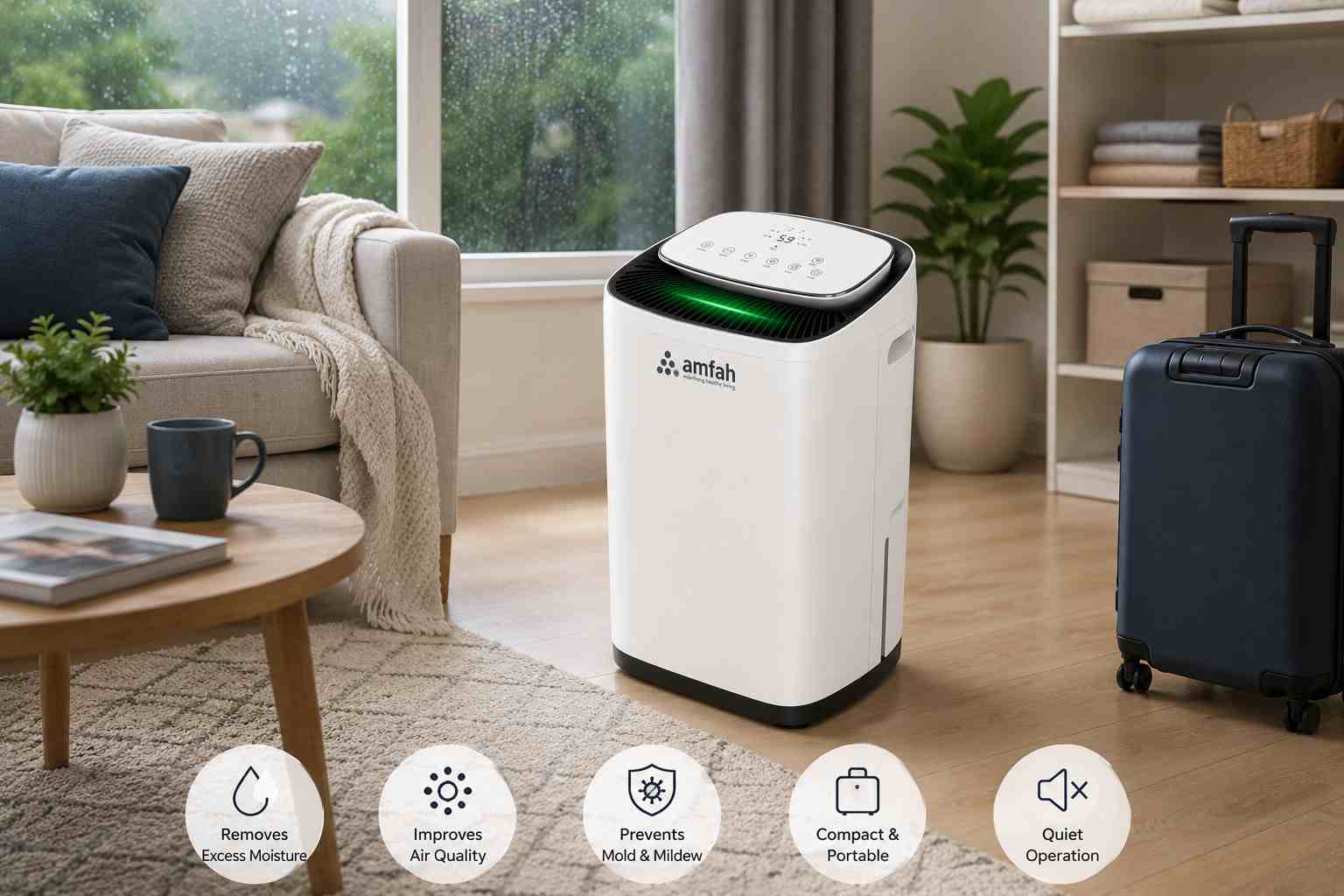
AMFAH commercial dehumidifiers help eye hospitals maintain balanced humidity in consultation rooms, operation theatres, equipment rooms, waiting areas, and storage spaces. By reducing excess moisture, they help create a cleaner, more comfortable environment for patients while supporting the long-term care of valuable ophthalmic equipment and hospital facilities.