Buying GuidesAugust 29, 20267 min read
What Size Dehumidifier Do I Need?
Find out what size dehumidifier you need for your room based on room size, humidity levels, moisture sources, and usage. A simple guide for Indian homes and offices.
 |The Most Preferred Brand on the Government e-Marketplace (GeM) Portal
 |The Most Preferred Brand on the Government e-Marketplace (GeM) Portal.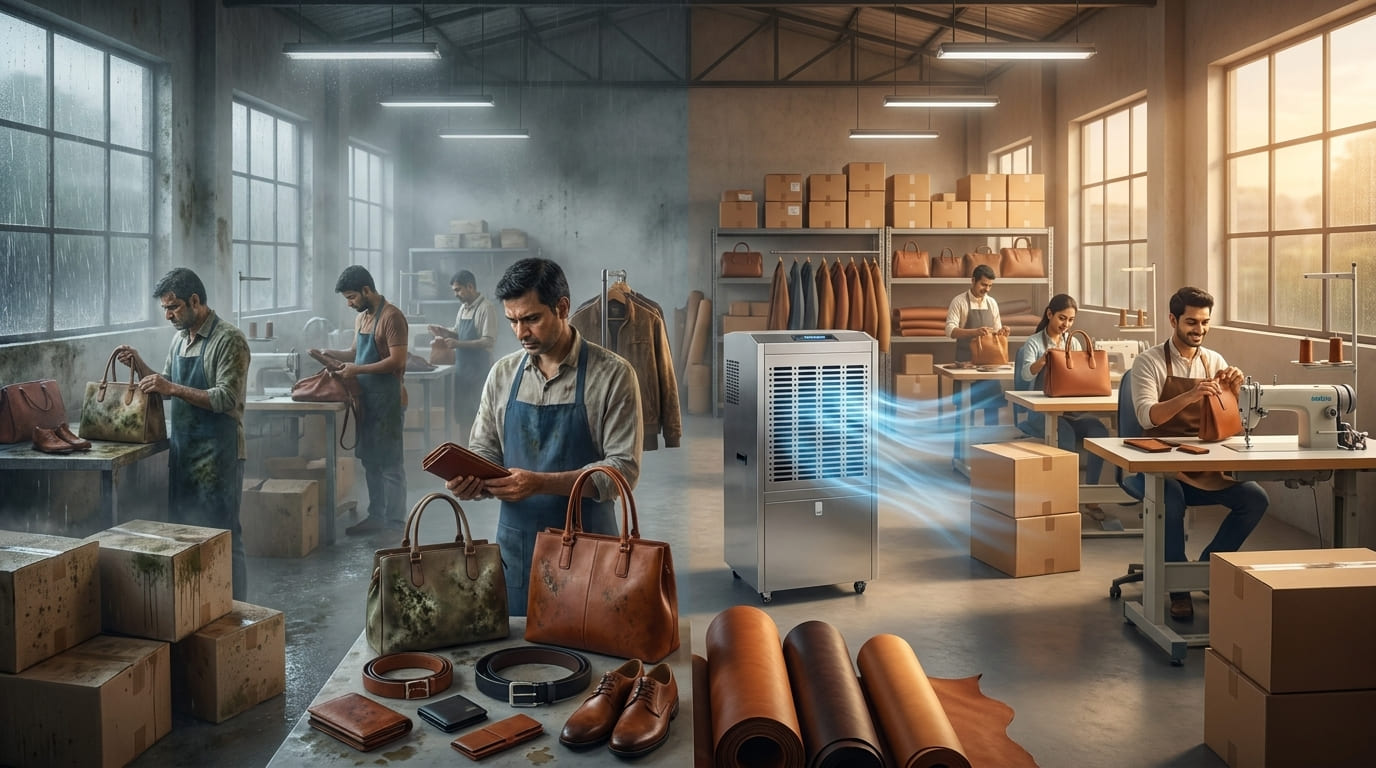
Leather is a premium natural material highly sensitive to environmental changes. Discover why maintaining optimal humidity levels is crucial for protecting leather products from mold, mildew, and structural damage during the monsoon.
Leather is one of the most valuable and durable natural materials used across industries. From premium handbags and luxury footwear to automotive interiors, furniture, jackets, belts, and industrial gloves, leather products are expected to last for years while maintaining their appearance and strength.
Leather products can be affected by something you cannot see. Humidity can really reduce how good leather products are and how long they last. Leather is different from man made materials because it is from nature. Leather is always changing because of the air, around it. When the air is humid the leather gets too much moisture. This makes it easy for mold to grow for bad smells to happen for the color to change and for the leather to get damaged.
In India when it is monsoon season these problems happen more. This affects the people who make leather the people who sell leather to countries, the people who store leather the people who sell leather and the people who buy leather. So now people who work with leather have to control the humidity.
By keeping the air just right businesses can keep their leather products good they can reduce the things that go wrong and they can keep their leather products valuable.
Leather is made from animal hide. It has lots of natural fibers. These fibers absorb moisture from the air. Release it when the air gets dry.
This is what makes leather flexible and comfortable. It also means leather can be affected by the environment.
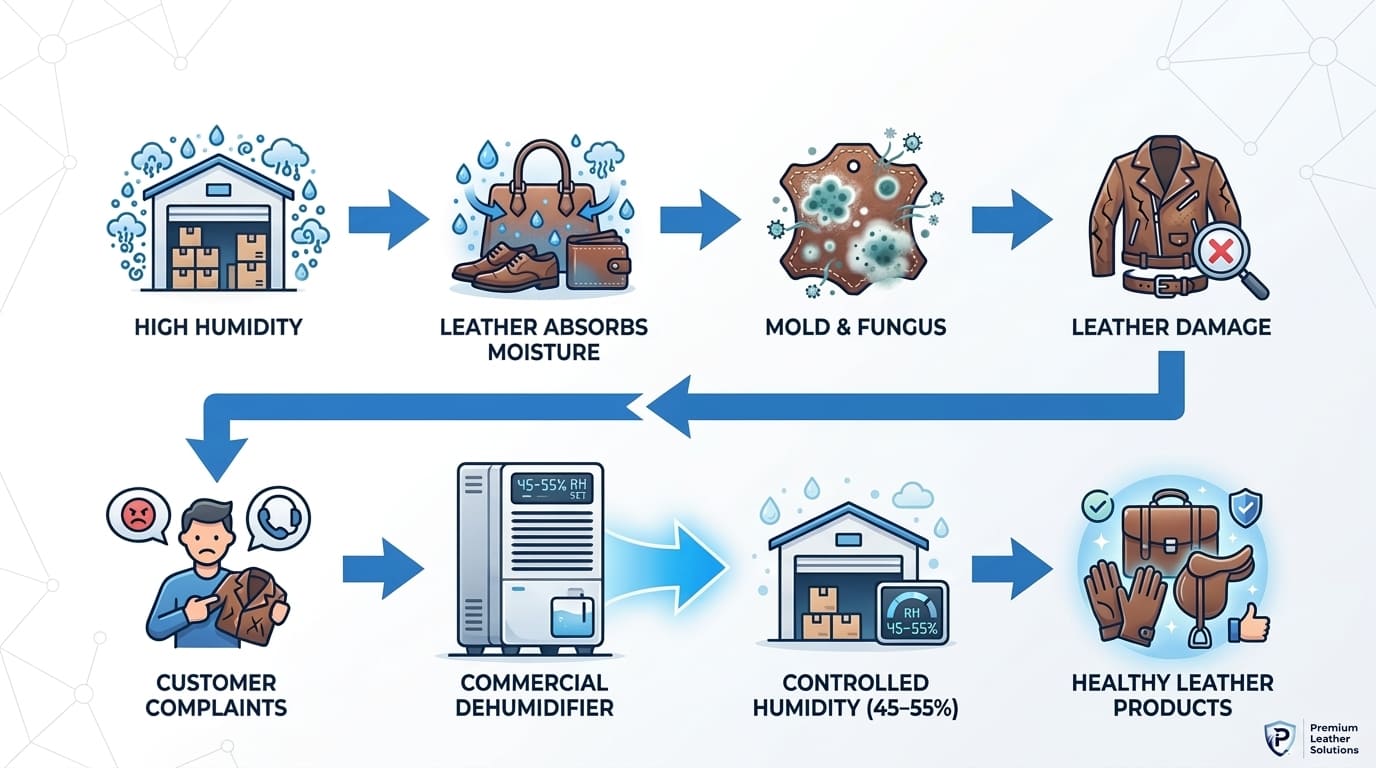
When it gets humid inside leather starts to absorb too much moisture. You might not notice anything at first. After a while the leather starts to change. It can get sticky or soft. It might even smell bad and Get mold on it.
If it gets too dry for long leather loses its natural moisture. Then it can get stiff or brittle. It might even crack.
So it is really important to keep the humidity right for leather. This is important, for the life of a leather product. Leather products need humidity from when they are made to when they are stored and sold in a store. Leather needs this to stay in condition.
India has a long and humid monsoon season. In a lot of cities the air outside is humid for weeks on end. It stays above 80 percent humidity for a time.
This is a problem for people who make leather things and for warehouses that store leather.
Every time someone opens the door to the warehouse. When fresh air gets in moisture comes in too. If the air inside the warehouse is not taken care of the humidity gets really high fast. This affects the leather that is being made and the leather that is already made.
This happens a lot in cities near the ocean, like Mumbai, Chennai, Kochi, Visakhapatnam and Kolkata. These cities are already really humid most of the year.
If the humidity is not controlled leather products can get damaged before they even get to the customer. The leather products can deteriorate long before they reach the customer.
Excessive humidity is a problem. One of the signs that you have too much humidity is mold. Mold is not good for your leather things. Tiny fungal spores are everywhere in the air. They are always floating around.
When the humidity gets too high these spores start to grow on leather. They especially like to grow on leather that's inside boxes or in your wardrobe or on storage racks or even, in shipping cartons.
Mold is bad because it can ruin how your leather looks. It can also leave stains on your leather that you cannot get rid of. Mold makes a strong musty smell that is really hard to get rid of.
Have you ever opened a leather bag after the rainy season and noticed a damp smell?
This happens because moisture trapped inside the leather creates the perfect environment for bacteria and fungi.
For retailers, unpleasant odors often lead to customer complaints and product returns.
Excess moisture can affect dyes, finishes, and protective coatings.
Premium leather products may develop:
For luxury brands, even minor defects can make products unsellable.
Humidity doesn't just affect appearance.
Over time, it weakens the internal fiber structure of leather.
This can result in:
For manufacturers, this means higher rejection rates and increased production costs.
Every stage of making leather needs an environment to work properly.
The leather production process has steps like tanning and finishing, drying, polishing and packaging. If the air is too humid it can be a problem, for the leather. It can affect how good the leather is and if it is the same every time.
For instance if it is too moist it takes longer for the leather to dry. It can also stop the glue from working and it can change the way the finish looks on the leather goods.
By maintaining stable humidity, manufacturers can improve product quality, reduce waste, and achieve more consistent results across production batches.
Warehouses often store thousands of leather products for weeks or even months before distribution.
Without humidity control, moisture gradually accumulates inside the storage area.
The result can include:
A controlled warehouse environment helps ensure products reach customers in the same condition they left the factory.
Leather doesn't stop reacting to humidity once it reaches a showroom.
Retail stores with poor ventilation may notice handbags, jackets, shoes, belts, and wallets developing mold or losing their finish during the rainy season.
Customers expect premium products to look perfect. Even a slight musty smell or visible stain can influence a purchase decision.
Maintaining the right indoor humidity helps protect display products and enhances the shopping experience.
For most leather manufacturing, storage, and retail environments, maintaining indoor relative humidity between 45% and 55% provides a good balance.
Within this range:
Monitoring humidity with a digital hygrometer helps businesses respond before problems develop.
Many businesses still rely on simple methods such as opening windows, using ceiling fans, or placing silica gel packets inside storage boxes.
While these solutions may help in small enclosed spaces, they cannot control the humidity of an entire factory, warehouse, or showroom.
Air conditioners also remove some moisture while cooling, but they are designed primarily to regulate temperature—not maintain precise humidity levels.
For commercial leather operations, dedicated humidity control is a much more reliable approach.
A commercial dehumidifier continuously removes excess moisture from the air and helps maintain a stable indoor environment.
Instead of reacting after mold appears or products become damaged, businesses can prevent humidity-related issues before they occur.
Installing a commercial dehumidifier offers several long-term benefits:
For industries that handle valuable leather goods every day, humidity control is not just an operational improvement it is an investment in product quality.
At AMFAH, we understand the challenges that India's climate creates for leather manufacturers, exporters, retailers, and warehouse operators.
Our commercial and industrial dehumidifiers are designed to deliver reliable humidity control in demanding environments, helping businesses protect valuable inventory, improve indoor air quality, and maintain consistent product quality throughout the year.
Whether you're operating a leather manufacturing unit, a storage warehouse, a retail showroom, or an export facility, AMFAH provides humidity control solutions tailored to your requirements.
Leather is a premium material but it gets damaged easily when it is too humidity. If you do not keep the air dry you can get mold on the leather, it can get ruined, it will smell bad and discoloration. You will lose a lot of money.
As India's monsoon brings prolonged periods of high humidity, maintaining the right indoor environment becomes more important than ever.
Rather than relying on temporary fixes, investing in proper humidity control helps protect inventory, improve manufacturing quality, and extend the life of valuable leather products.
For businesses that value quality and long-term reliability, controlling humidity isn't just a maintenance task it's an essential part of protecting both products and reputation.
Find out what size dehumidifier you need for your room based on room size, humidity levels, moisture sources, and usage. A simple guide for Indian homes and offices.
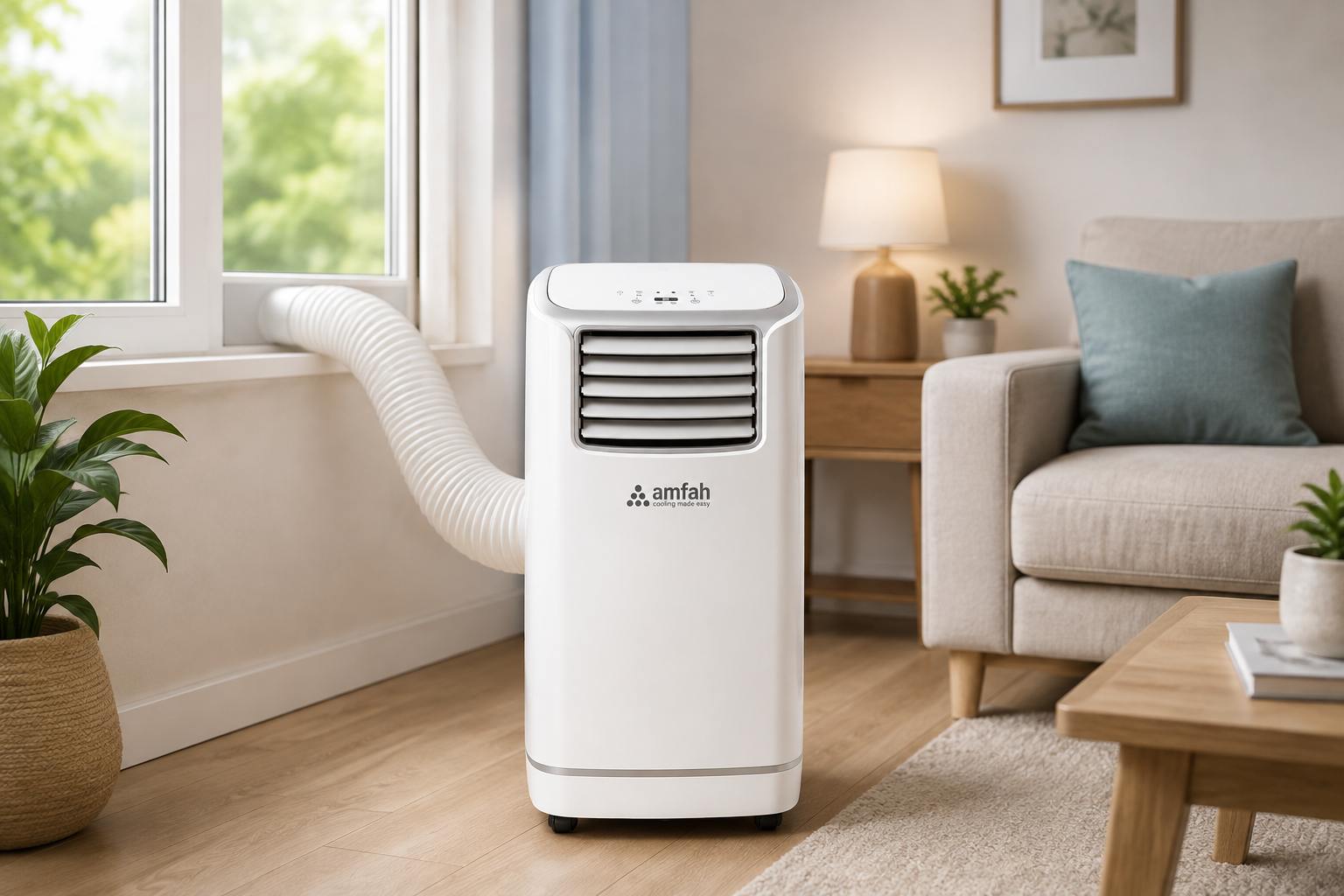
Discover why portable ACs are becoming popular in India and how they offer flexible cooling for homes, rental properties, offices, and commercial spaces.
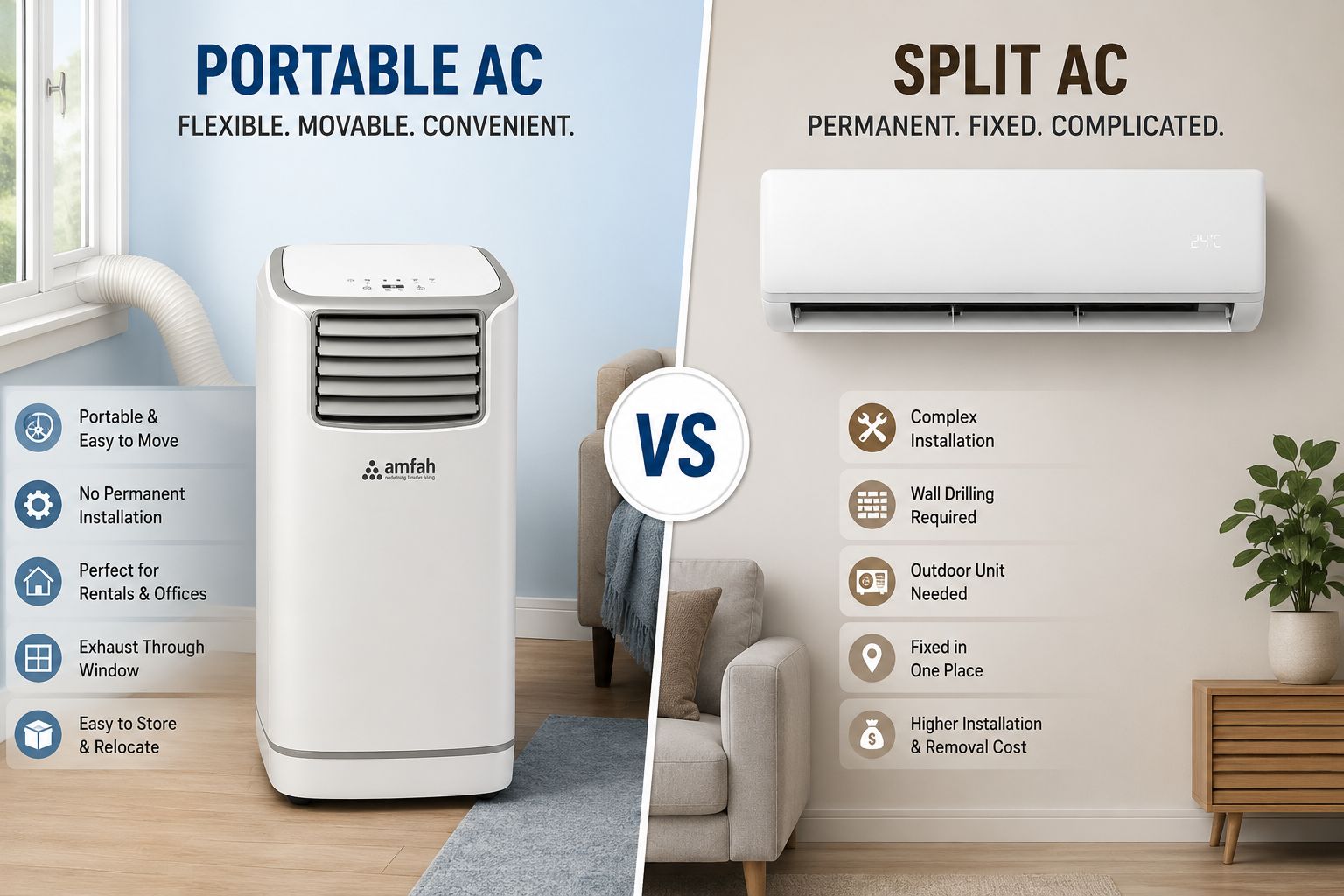
Compare portable AC vs split AC to understand installation, portability, wall damage, cooling, and why portable AC is a practical choice for homes, offices, and rental spaces.
Our Senior indoor air consultants are online to draft complete thermodynamic calculations for industrial cleanrooms, warehouses, data grids, or residential spaces.