
Buying GuidesAugust 29, 20267 min read
What Size Dehumidifier Do I Need?
Find out what size dehumidifier you need for your room based on room size, humidity levels, moisture sources, and usage. A simple guide for Indian homes and offices.
 |The Most Preferred Brand on the Government e-Marketplace (GeM) Portal
 |The Most Preferred Brand on the Government e-Marketplace (GeM) Portal.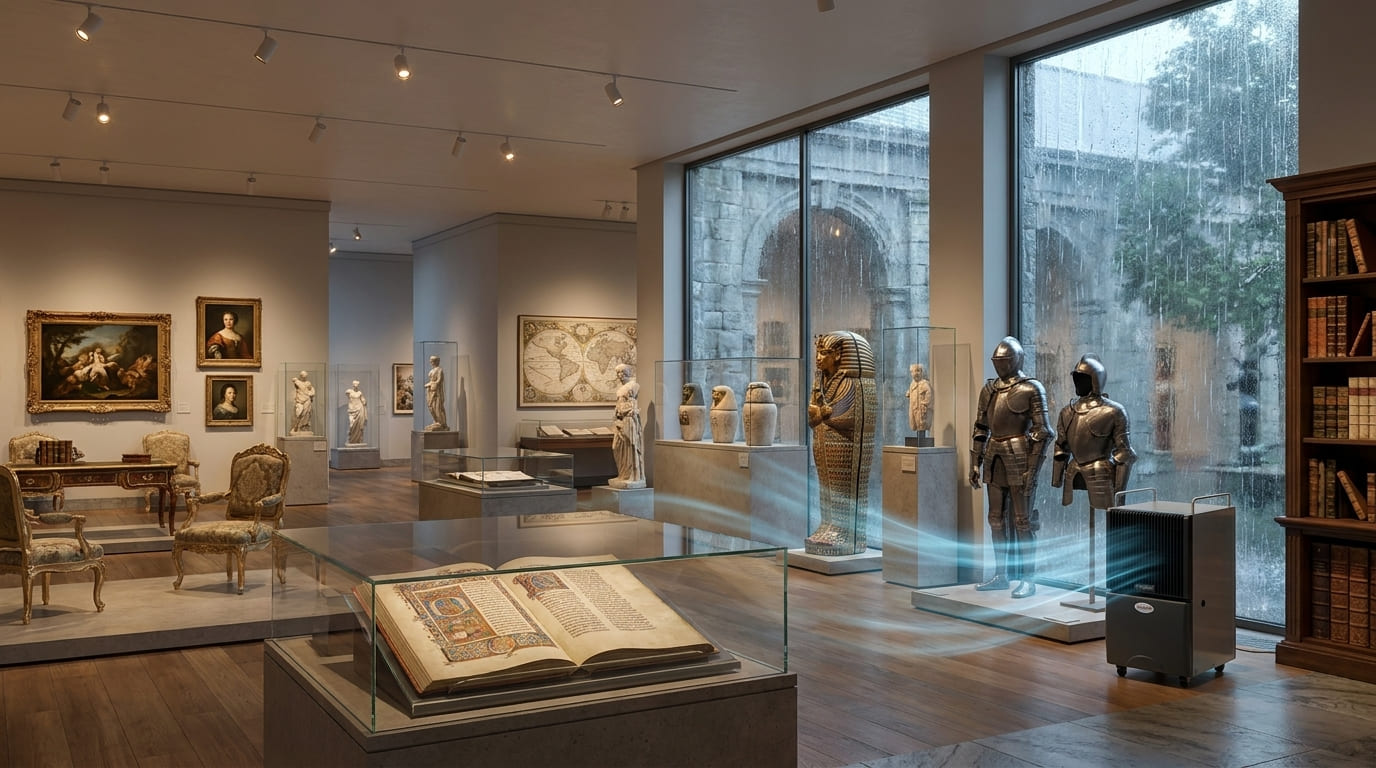
Learn how humidity affects museum collections, paintings, historical artifacts, manuscripts, and cultural heritage, and why commercial dehumidifiers are essential for long-term preservation.
Museums preserve priceless paintings, sculptures, historical documents, textiles, and artifacts that represent our culture and history. These collections are meant to last for generations, but one of their biggest threats is something most people cannot see humidity.
Excess moisture in the air can gradually damage valuable collections by causing mold growth, corrosion, warping, discoloration, and material deterioration. During humid seasons, especially in tropical countries like India, maintaining a stable indoor environment becomes essential. This is why museums around the world invest in humidity control systems to help protect their collections.
Many museum objects are made from natural materials such as wood, paper, leather, canvas, and fabric. These materials continuously absorb and release moisture depending on the surrounding air.
When humidity becomes too high or changes frequently, these materials expand and contract, leading to cracks, warping, mold, and other forms of irreversible damage. Conservation experts generally recommend maintaining 45 – 55% Relative Humidity (RH) with minimal fluctuations for mixed museum collections.
Canvas and wooden frames absorb moisture, which can cause paint to crack, flake, or develop mold over time.
Wood expands when it absorbs moisture and shrinks as it dries. Repeated changes can lead to warping, cracks, and weakened joints.
Old books, manuscripts, maps, and photographs are highly sensitive to humidity. Excess moisture encourages mold growth, weakens paper fibers, and may cause ink to bleed or fade.
Historic clothing, flags, and fabrics can develop mildew, lose color, and become fragile in humid environments.
Coins, weapons, statues, and other metal objects are vulnerable to corrosion and oxidation when exposed to excessive moisture.
Leather bound books, bags, footwear, and historical accessories can develop mold, unpleasant odors, stains, and surface damage if humidity is not controlled.
While air conditioners help cool museum spaces, they do not always maintain consistent humidity levels. During the monsoon or in naturally humid regions, moisture can remain high even when the temperature is comfortable.
For this reason, many museums use dedicated commercial dehumidifiers alongside HVAC systems to maintain stable humidity throughout the year.
| Collection Type | Recommended Humidity |
|---|---|
| Paintings | 45–55% RH |
| Wooden Artifacts | 45–55% RH |
| Historical Documents | 45–55% RH |
| Leather Collections | 45–55% RH |
| Textiles | 45–55% RH |
| Mixed Museum Collections | Around 50% RH |
Commercial dehumidifiers continuously remove excess moisture from the air, helping museums maintain a stable environment and reduce the risk of moisture-related damage.
Key benefits include:
AMFAH commercial dehumidifiers help museums, art galleries, archives, libraries, and heritage buildings maintain stable indoor humidity throughout the year. By controlling excess moisture, they help protect valuable collections from mold, corrosion, and environmental damage, ensuring artifacts remain preserved for future generations.
Humidity is one of the most significant environmental threats to museum collections. Without proper control, priceless paintings, manuscripts, sculptures, textiles, and historical artifacts can suffer irreversible damage over time.
Maintaining stable humidity levels with a commercial dehumidifier helps museums protect their collections, reduce restoration costs, and preserve cultural heritage for generations to come.
Find out what size dehumidifier you need for your room based on room size, humidity levels, moisture sources, and usage. A simple guide for Indian homes and offices.
Discover why portable ACs are becoming popular in India and how they offer flexible cooling for homes, rental properties, offices, and commercial spaces.
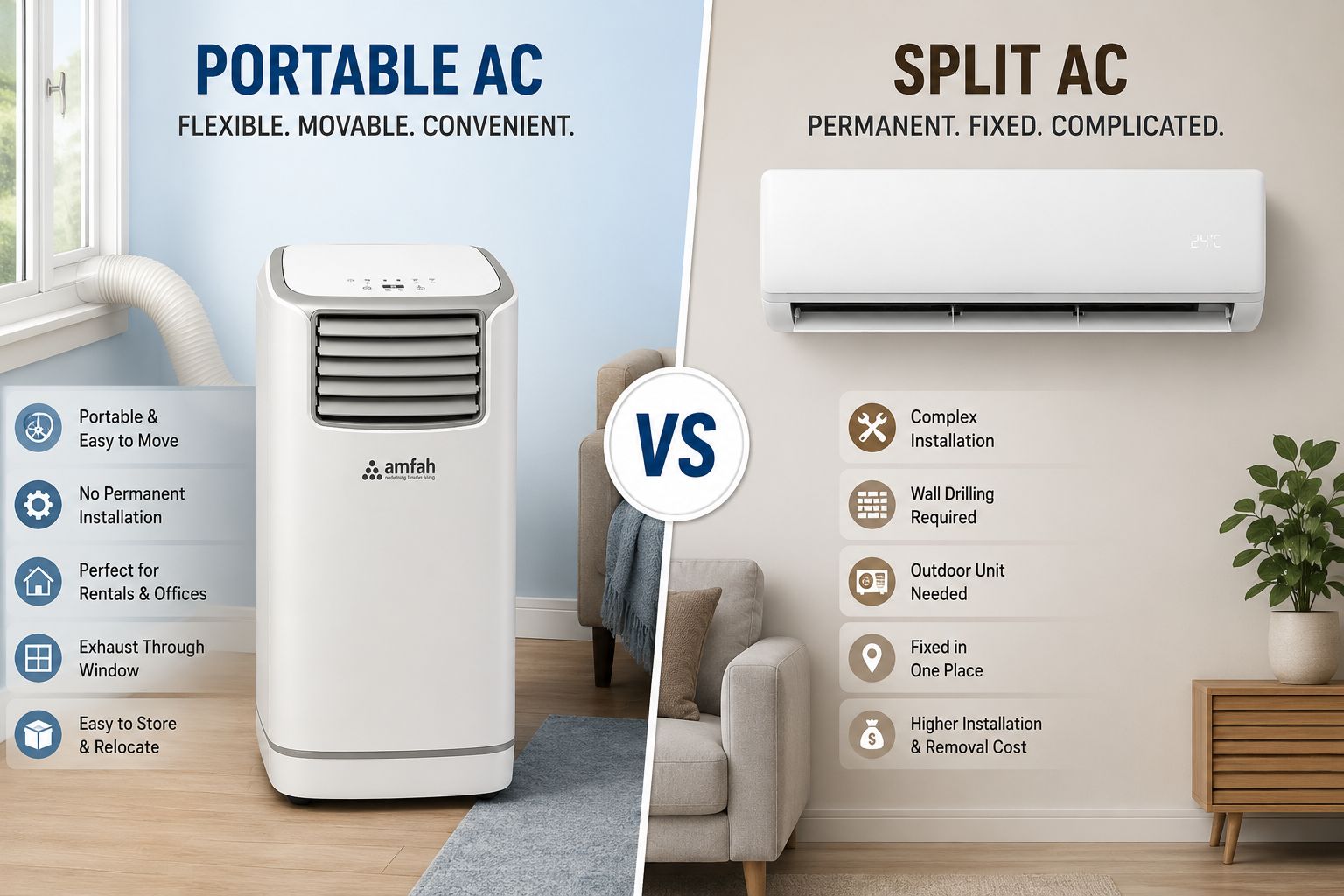
Compare portable AC vs split AC to understand installation, portability, wall damage, cooling, and why portable AC is a practical choice for homes, offices, and rental spaces.
Our Senior indoor air consultants are online to draft complete thermodynamic calculations for industrial cleanrooms, warehouses, data grids, or residential spaces.