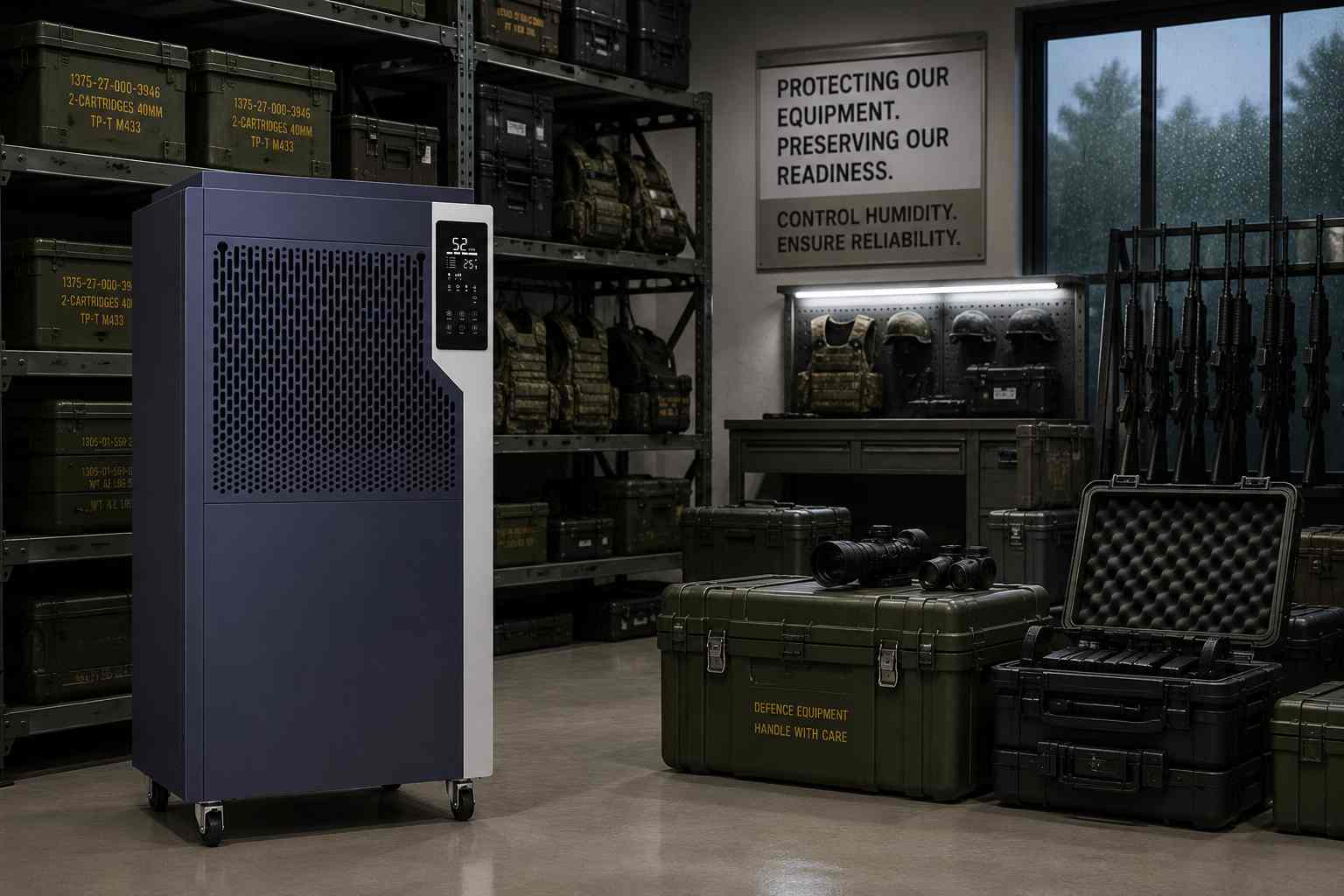
Defence equipment represents some of the most expensive, precision engineered assets a nation owns. Weapons, ammunition, optical instruments, communication systems, and armoured vehicle parts are all built to exact tolerances, and moisture is one of their biggest enemies during storage.
How Humidity Damages Defence Equipment
Weapons, ammunition casings, and vehicle components are largely metal, and excess moisture in the air causes rust and corrosion. This can compromise structural integrity and, in the case of ammunition, even safety.
Radar equipment, night vision devices, communication systems, and targeting optics contain sensitive electronics and lenses. Humidity can cause fogging, fungal growth on lens coatings, and short circuits in wiring. Ammunition and explosive materials are highly sensitive to moisture too. It can affect the chemical stability of propellants, impacting performance and shelf life. Storage areas with poor humidity control can also develop mould on fabric components like uniforms, parachutes, tents, and protective gear, weakening materials over time.
Why This Matters More in Defence Than Other Industries
Unlike commercial goods, defence equipment often sits in storage for years before deployment, and it needs to work flawlessly the moment it's needed. There's no room for gradual degradation to go unnoticed. Bunkers, armouries, and warehouses are frequently built partially or fully underground, or in enclosed structures with limited airflow, which naturally traps moisture and makes humidity control even more essential.
The Ideal Humidity Range
For most defence storage applications, relative humidity is maintained between 35% and 50%. More sensitive items like optics and electronics sometimes need even tighter control, often below 40%.
How Dehumidifiers Help
Industrial and specialised dehumidifiers are used in armouries, ammunition depots, and equipment stores to maintain stable, low humidity regardless of external weather conditions. They prevent corrosion on metal components and casings, protect sensitive electronics and optical coatings from moisture damage, preserve the chemical stability of propellants and explosive materials, and reduce the need for frequent maintenance, cleaning, and equipment replacement.
Special Considerations for Defence Storage
Defence facilities often need dehumidifiers that can operate reliably in enclosed or underground spaces with limited ventilation, run continuously with minimal maintenance downtime, meet strict operational and safety standards, and integrate with existing environmental monitoring systems used in secure facilities.
Final Thoughts
For defence organisations, equipment readiness isn't optional. It's mission critical. Controlling humidity in storage facilities is one of the simplest and most cost effective ways to protect high value assets, extend their operational life, and ensure they perform reliably when called upon.
Amfah provides industrial dehumidification solutions suited for defence storage, armouries, and secure facilities. Contact us to discuss your requirements.